
Repository Radar - PR#15
Keeping an eye on the world of OSS software - one scan at a time


Welcome to PR#15 of Repository Radar – your no-fluff scan of open-source software infrastructure. This week, the spotlight is on projects championing privacy, decentralization, and local-first resilience—a clear response to rising cloud costs, tightening privacy regulations, and the risks of vendor dependency.
📡 ABOVE THE RADAR (aka the BFD)
In “above the radar” we take a look at some of the big splash software infrastructure announcements and go on the hunt for OSS that are similar.
Just this week, open-source infrastructure continues its rise as fragmentation and data ownership become central in tech debates. Notably, Anaconda—the go-to Python platform for AI and data science—is now a unicorn, having raised over $150 million in a Series C round led by Insight Partners, pushing its valuation to $1.5 billion. As Anaconda scales globally and explores acquisitions, it’s a reminder that open-source is not just surviving—it’s thriving in the mainstream.
Simultaneously, medical imaging startup Exo, famed for its AI-powered handheld ultrasound devices, is drawing strategic interest from Samsung. Samsung Ventures is reportedly participating in a follow-on round—possibly up to $100 million—joining existing backers like Sands Capital, Bold Capital, and Qubit Health. This coincides with a strategic collaboration between Exo and Samsung Medison to co-develop cutting-edge ultrasound solutions, signaling serious momentum in decentralized, high-grade healthcare tools.
The repositories in PR#15 speak directly to these shifts:
The repositories in PR#15 speak directly to these shifts:
Paperless-ngx – transforming document management into a secure, self-hosted archive
Umami – delivering privacy-first, open analytics without intrusive tracking
EXO – enabling peer-to-peer AI clusters from everyday devices
Midday – integrating freelance operations into one open, locally controlled platform
From monolithic SaaS and centralized stacks to modular, open, and user-controlled infrastructure, spanning analytics, AI compute, business ops, and documentation.
As VC dollars flow into open infrastructures like Anaconda—and big players like Samsung seek to decentralize healthcare stacks—it’s clear developers are choosing tools they control, not just consume. This shift isn’t niche—it’s shaping the next era of reliable, transparent tooling.
🗒️ Paperless-ngx (GitHub) 30.7k ☆ – Supercharged Self-Hosted Document Management

Paperless‑ngx is a community-driven, open-source document management system that helps you drastically reduce your paper clutter by scanning, indexing, and archiving physical documents into a powerful, searchable online archive—think “less paper, more control.” It’s the official successor to both Paperless and Paperless‑ng, and supports easy migration from either.
Why It's a Big Deal:
Smart indexing & search: OCR-powered with Tesseract (100+ languages), tagging, correspondents, document types, custom metadata, full-text search, and a “More like this” similarity search via a sleek modern web UI.
Versatile ingestion: Bring in documents via scanner folder watch, email ingestion with automation rules, drag-and-drop, or batch upload.
Secure, portable storage: Documents are archived in long-term PDF/A format alongside originals, with metadata managed in a database.
Self-hosted ease: Deploy quickly with Docker Compose or use the interactive install script; bare-metal installs also supported.
Under the Hood:
Stack: Built with Django (Python) backend and AngularJS/TypeScript frontend. GPL‑3.0 licensed.
Deployment: Docker‑friendly with official install script; multiple Compose templates available (e.g. Postgres-backed).
Active development: With ~1.8 k forks and 120+ releases (latest v2.17.1 released June 19, 2025), it’s evolving fast.
Community & contributions: Multilingual support via Crowdin, open to contributions across UI, CI/CD, dev tooling, and documentation. Community hubs include GitHub Discussions and a Matrix chat room.
Compliance & reliability: Recognized in some contexts as GoBD-compliant (German fiscal law), with emphasis on proper audit, backups, and infrastructure.
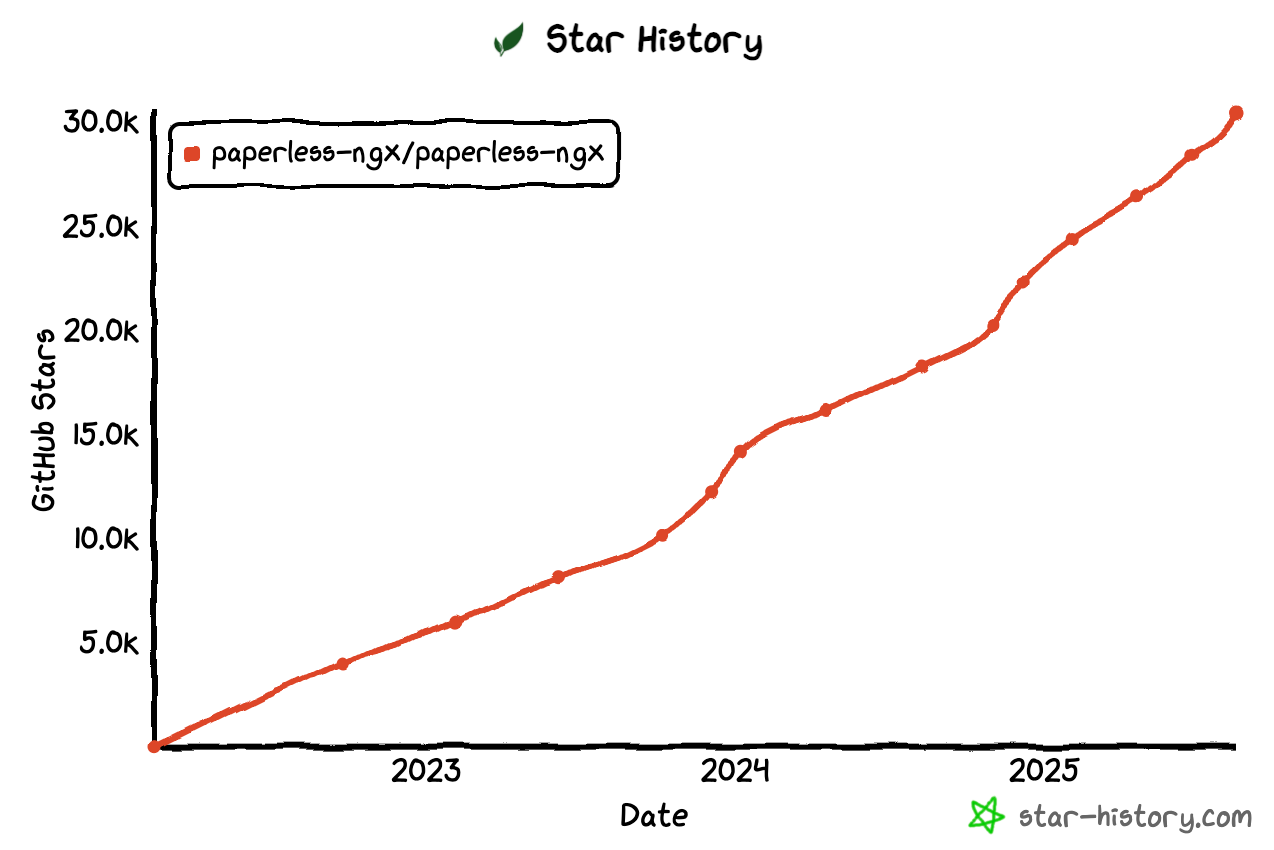
Paperless-ngx makes digital archiving painless, secure, and searchable—perfect for individuals and organizations aiming to go paper-free without giving up control of their data.
🔭 ON THE RADAR
Stuff that’s hot and is trending at over 10K stars.
☸️ Umami (GitHub) 30.3k ☆ – Privacy-First Analytics Platform

The Scoop: Umami is a sleek, privacy-focused self-hosted alternative to Google Analytics. It’s simple to deploy, fast, and built for those who want meaningful insights without compromising user privacy.
Why It's a Big Deal
Privacy-first design: Collects only essential metrics and avoids invasive tracking.
Ease-of-use: Lightweight and self-hosted, giving full control over data.
Modern analytics features: Supports data exports, event properties display, and evolving toward rich user journey tracking.
Under the Hood
Built with TypeScript/JavaScript and MIT-licensed.
Deployable via Docker or local build with clear npm instructions and .env-based configuration.
Active development, with the v2.19.0 release recently preparing migration paths for the upcoming v3.
Umami makes web analytics accessible, transparent, and respectful of privacy—great for developers and small teams seeking a clean analytics experience.
☸️ EXO (GitHub) 30.2k ☆ – DIY AI Cluster Framework

The Scoop: EXO lets you form your own AI cluster at home or work using everyday devices—phones, laptops, Raspberry Pis, you name it. It orchestrates collective GPU/CPU resources to run large AI models beyond individual device limits.
Why It’s a Big Deal
Device-agnostic clustering: Works seamlessly across heterogeneous hardware without complex setup.
Scalable model inference: Dynamic partitioning ensures models can be run across multiple devices, improving throughput.
Easy integration: Offers a ChatGPT-compatible API for plug-and-play usage.
Under the Hood
Built in Python under GPL-3.0 license.
Supports a wide range of models (LLaMA, Mistral, Qwen, DeepSeek) and inference engines like MLX, tinygrad, and others.
Zero-conf device discovery with peer-to-peer architecture; no central controller.
EXO democratizes AI compute, letting hobbyists and researchers harness distributed hardware to run models that’d otherwise require expensive setups.
☸️ Midday (GitHub) 10.8k ☆ – Freelancer Business Assistant

The Scoop: Midday is an all-in-one productivity and business operations tool tailored for freelancers, contractors, and solo entrepreneurs. It streamlines tasks like time tracking, invoicing, document storage, and more within a unified platform.
Why It's a Big Deal
Integrated workflow: Combines time tracking, invoicing, expense management, and assistant insights in one place.
Smart assistance: Features like the “Magic Inbox” auto-matches receipts or invoices to transactions to minimize manual bookkeeping.
Secure file vault: Keeps critical documents organized and easily retrievable.
Data portability: Financial data exports are CSV-ready for easy reporting or accounting handoffs.
Under the Hood
Built in TypeScript under AGPL‑3.0 license.
Active project with 9.6k stars and multiple associated repos (e.g., starter kit “v1” with 3.6k stars).
No official release binaries yet, but code is under active development.
Midday turns the scatter of freelance tools into a cohesive digital assistant—ideal for staying organized and managing business from one dashboard.
🔬 BELOW THE RADAR
Our hot picks for recent OSS projects to keep a close eye on for the future.
🖥️ Ubicloud (GitHub) ~9.9k ☆ – Open Source Cloud IaaS
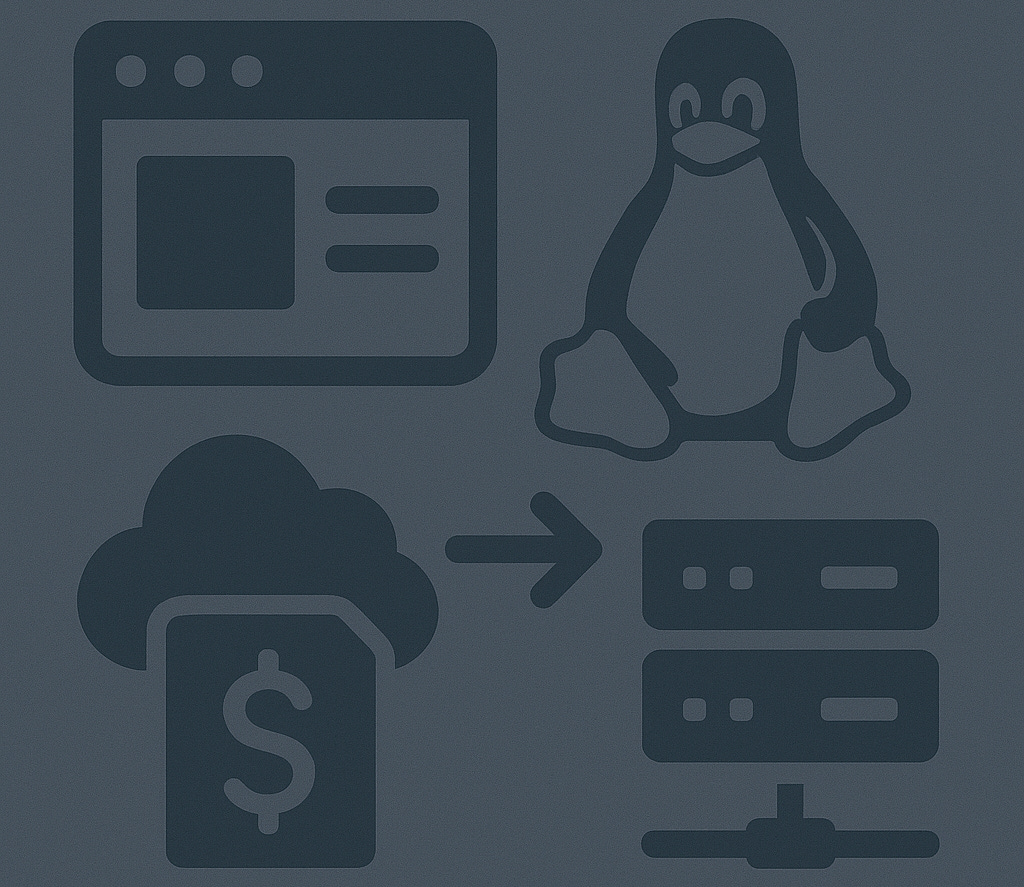
The Scoop: Ubicloud is an open-source alternative to AWS—essentially “Linux for the cloud.” It delivers essential IaaS features on bare-metal providers like Hetzner, Leaseweb, or AWS Bare Metal. You can self-host it or use their managed service. Ubicloud includes elastic compute, block storage, virtual networking, load balancing, managed Postgres, AI inference, Kubernetes, IAM services, and GitHub Actions runners—all aimed at lowering cost, increasing transparency, and avoiding vendor lock-in.
Get started: Clone the repo and demo cloudify a bare-metal instance:
git clone git@github.com:ubicloud/ubicloud.git
cd ubicloud
./demo/generate_env
docker-compose -f demo/docker-compose.yml up
🖥️ FastAPI-MCP (GitHub) 9.3k ☆ – MCP-Enable Your FastAPI
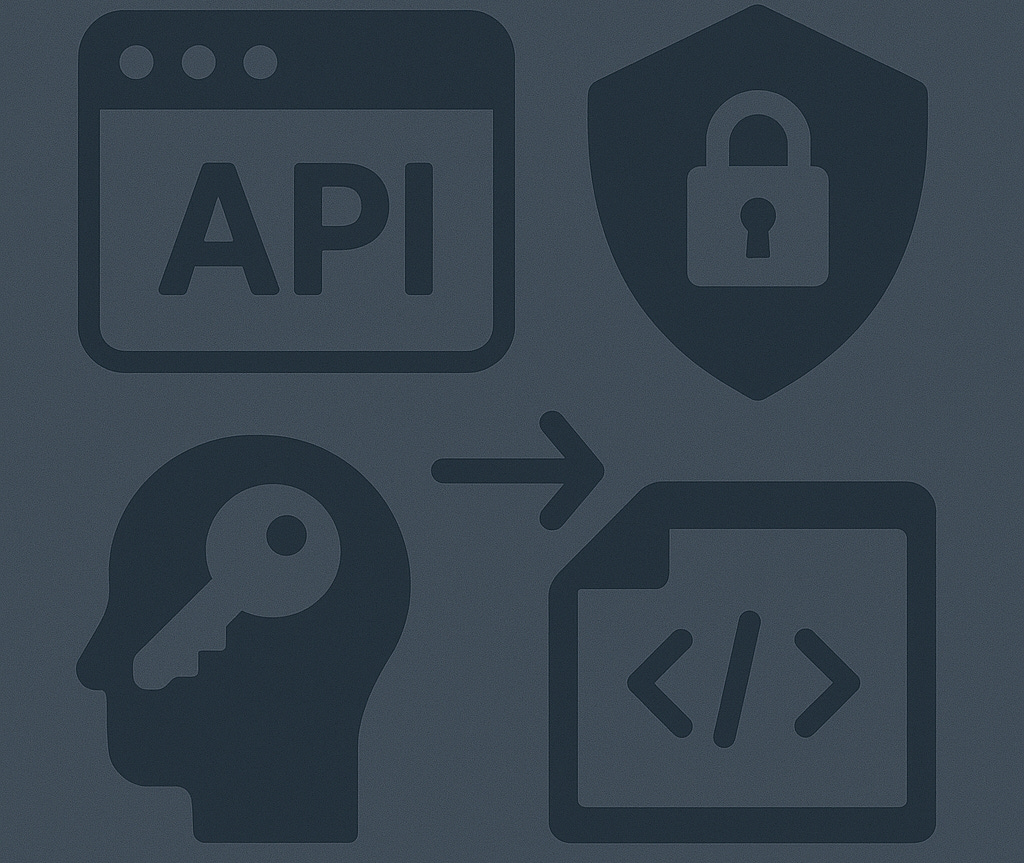
The Scoop: FastAPI-MCP automatically exposes your FastAPI endpoints as Model Context Protocol (MCP) tools, complete with authentication and zero to minimal configuration. Designed to integrate natively with FastAPI—this isn’t just a converter. It preserves your request/response schemas, Swagger documentation, and supports flexible deployment via direct mounting or separate servers. Authentication leverages your existing FastAPI dependencies, and it uses ASGI transport for efficient in-process communication.
Get started: Install with uv or pip and mount it directly in your FastAPI app:
uv add fastapi-mcp
# or
pip install fastapi-mcp

from fastapi import FastAPI
from fastapi_mcp import FastApiMCP

app = FastAPI()
mcp = FastApiMCP(app)
mcp.mount()
🖥️ AI-Toolkit (GitHub) 6k ☆ – Diffusion Model Finetuning Suite

The Scoop: AI-Toolkit by Ostris is a comprehensive training suite for fine-tuning diffusion models—covering everything from LoRA extraction and training to image generation, with both CLI and web-based UI. It’s packed with documentation and accessible even for non-developers. The UI allows you to start, monitor, and train models via a browser with optional token access.
Get started: Clone and set up with Python and Torch:
git clone https://github.com/ostris/ai-toolkit.git
cd ai-toolkit
python3 -m venv venv
source venv/bin/activate
pip install torch torchvision torchaudio --index-url https://download.pytorch.org/whl/cu126
pip install -r requirements.txt)
Repository Radar is brought to you by Alexander, a Partner at Picus Capital, and Claudius, an Investor there. In this Substack, we focus on software infrastructure and open-source innovation in AI and beyond, tracking major trends while uncovering the hidden gems shaping the future of technology.