
Repository Radar - PR#20
Keeping an eye on the world of OSS software - one scan at a time


Welcome to PR#20 of Repository Radar - your no-fluff scan of open source software infrastructure. This week tracks how OSS agent stacks are scaling into enterprise adoption: LangChain raised 125m USD at a 1.25b USD valuation while launching new versions of LangGraph and LangSmith. We also cover self-hosted tools pushing developer control further - Immich for private media, Pathway’s llm-app for live-data RAG, and Wave Terminal for integrated AI workflows. Below the Radar highlights Microsoft’s Agent Lightning for training agents with RL, Open Notebook as a private Notebook LM replacement, and Polar as an OSS platform for monetization.
📡 ABOVE THE RADAR (aka the BFD)
In “above the radar” we take a look at some of the big splash software infrastructure announcements and go on the hunt for OSS that are similar.
Earlier this month, LangChain announced a new 125m USD at a 1.25b USD valuation fundraise led by IVP, with CapitalG and Sapphire joining, and existing investors Sequoia, Benchmark, and Amplify participating. Alongside the funding, the team shipped coordinated updates across its OSS core (LangChain), orchestration layer (LangGraph 1.0), and observability suite (LangSmith). The release introduces unified APIs for agent memory and tracing, tighter coupling across the three layers, and a clearer path from prototype to production.
For the broader ecosystem, this is a clear win for OSS and proof that you can build something significant with an open-first approach even in the thin layer of AI infrastructure. LangChain has kept its core frameworks open while adding commercial depth around orchestration, evaluation, and monitoring.
We previously featured LangGraph in PR#11, and its evolution from OSS experiment to platform backbone shows how open development can compound into defensible infrastructure.
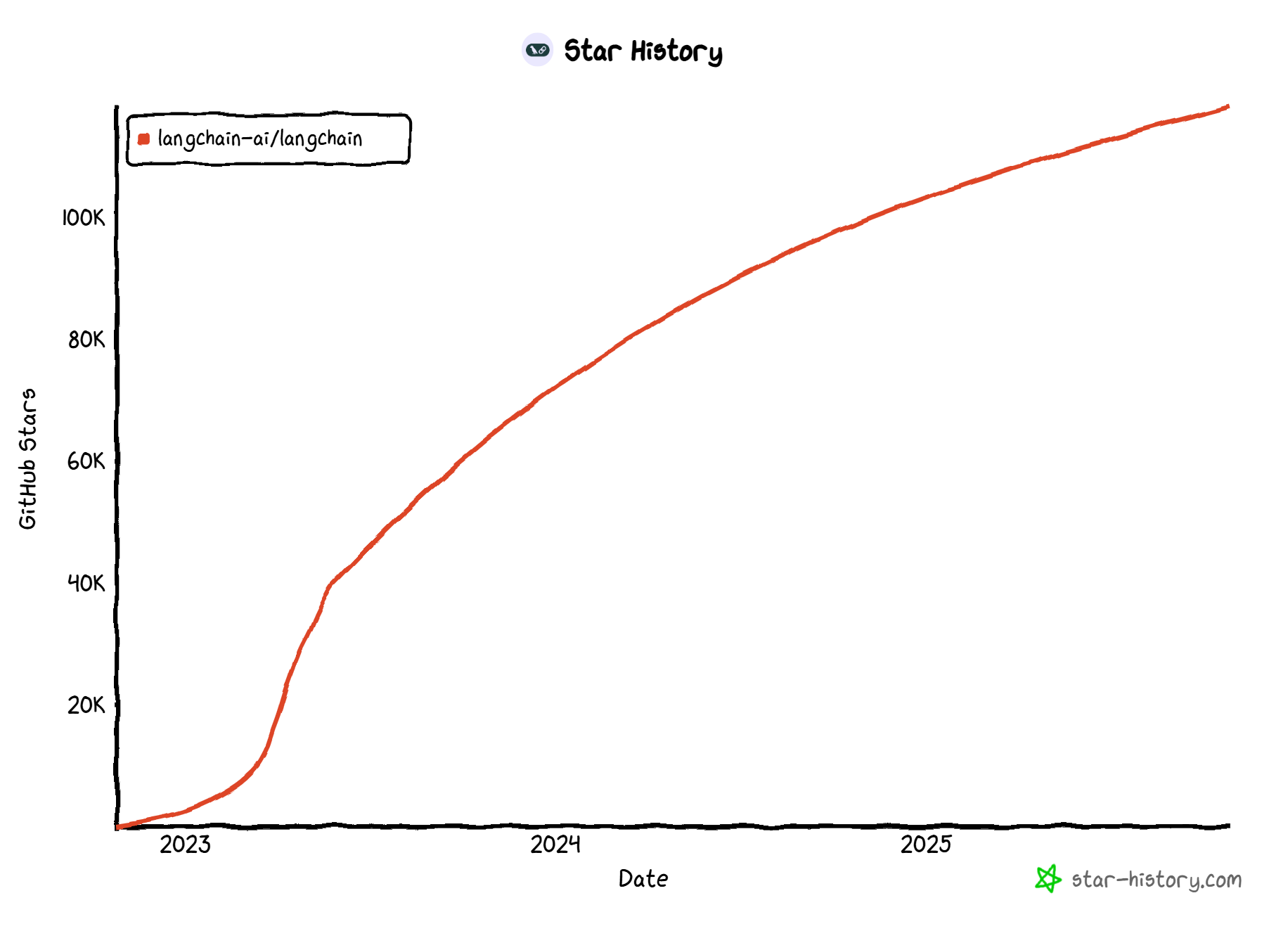
🧠 LangChain (GitHub) 118k ☆ - framework and components for context-aware reasoning and agentic applications

The Scoop: LangChain provides composable primitives and integrations for LLM apps and agents. LangGraph adds graph-based orchestration, and LangSmith provides evaluation, tracing, and observability for production. The GitHub org includes Python, TypeScript, and example apps.
Why It’s a Big Deal
Connects OSS experimentation with production through LangSmith while keeping core libraries open
Standardizes agent patterns around graphs and stateful workflows
Broad integration surface reduces switching costs across tools and providers
Under the Hood
Python and TypeScript libraries with modular adapters and tool interfaces
LangGraph examples for stateful, multi-actor agents and long-running tasks
Public docs and templates for agents, RAG, and workflows
In just two years, the LangChain team has therefore turned an open-source experiment into one of the most widely adopted frameworks for building LLM-powered applications. With LangGraph and LangSmith, they are now packaging the ecosystem’s collective learning into production-grade, open infrastructure.
🔭 ON THE RADAR
Stuff that’s hot and is trending at over 10K stars.
🖼️ Immich (GitHub) 82.4k ☆ - self-hosted photo and video management

The Scoop: Immich provides backup, search, and organization for photos and videos with web and mobile clients, face clustering, OCR, and CLIP search. It targets local control with active releases and a large contributor base.
Why It’s a Big Deal
Local-first control for large libraries with modern search and recognition
Mature mobile and web clients ease migration from cloud services
Community charts and packages support Kubernetes and container deployments
Under the Hood
TypeScript, Dart, Svelte, and NestJS-based server
Vector and metadata search with face and object detection
AGPL-3.0 license and frequent tagged releases
Developed by the Immich community, the project delivers a self-hosted photo and video management platform optimized for speed, privacy, and multi-device use. Users can run it locally to manage personal or shared libraries with automatic backups and on-device intelligence, while developers can extend it to integrate machine-learning-based search, deduplication, and recognition workflows.
🧩 Pathway LLM App (GitHub) 46k ☆ - Ready-to-run templates for RAG and AI pipelines

The Scoop: Pathway’s LLM App provides production-ready templates for retrieval-augmented generation (RAG), multimodal indexing, and enterprise AI search on live data sources. It synchronizes documents, APIs, and databases in real time and eliminates the need for separate vector databases or orchestration layers. The templates include pipelines for question-answering, multimodal parsing, adaptive RAG, and SQL-based querying.
Why It’s a Big Deal
Enables enterprise-grade RAG deployments with minimal setup
Combines real-time indexing and vector search into one framework
Supports fully local, hybrid, and cloud-native configurations
Under the Hood
MIT-licensed and written in Python and Jupyter Notebook
Uses the Pathway Live Data engine with a Rust backend
Docker-friendly and runs on any major cloud or on-prem environment
Developed by the Pathway team, the project provides ready-to-run templates for deploying RAG and AI pipeline applications on live data. Data engineers and researchers can use it to synchronize knowledge across files, APIs, and databases in real time, while enterprises can deploy scalable retrieval and indexing systems without maintaining separate infrastructure components.
💻 WaveTerm (GitHub) 12.5k ☆ - Open-source terminal with graphical and AI-assisted workflows
The Scoop: WaveTerm is a cross-platform open-source terminal that combines command-line interfaces with modern graphical tools. It integrates editors, web browsers, file previews, and AI assistants directly inside the terminal, enabling multitasking without context switching. It supports drag-and-drop panels, syntax-highlighted editing, remote connections, and AI model integration (OpenAI, Claude, Ollama, and more).
Why It’s a Big Deal
Blends CLI workflows with rich graphical interfaces
Supports AI-powered terminal interactions and workspace automation
Runs seamlessly across macOS, Linux, and Windows
Under the Hood
Licensed under Apache-2.0
Written in Go and TypeScript
Includes built-in editor, file preview, and AI panel components
Developed by the WaveTerm team, the project unifies command-line productivity and graphical workflows inside a single terminal environment. Developers can use it to integrate code editing, file previews, and AI chat directly within their terminal sessions, while teams can standardize development environments across macOS, Linux, and Windows with full visual context and automation built in.
🔬 BELOW THE RADAR
Our hot picks for recent OSS projects to keep a close eye on for the future.
🛠️ Agent Lightning (GitHub) 2.7k ☆ – Train any AI agent with reinforcement learning

The Scoop: Agent Lightning by Microsoft Research introduces reinforcement learning for any AI agent framework, from LangChain and CrewAI to AutoGen or OpenAI’s Python SDK. It adds optimization, reward tuning, and automatic prompt improvement to existing agent stacks with minimal setup. The framework connects directly to model APIs and logs structured traces to a central LightningStore for continuous learning.
Get started:
pip install agentlightning🛠️ Open Notebook (GitHub) 8.5k ☆ – Open-source, privacy-first alternative to Notebook LM
The Scoop: Open Notebook is a self-hosted, privacy-first research and note-taking environment inspired by Google’s Notebook LM. It supports multimodal content (PDFs, videos, web pages), integrates 16+ AI providers, and runs fully locally or via Docker. Users can chat over their own materials, perform vector and full-text search, and even generate podcasts. It’s designed for local control, model flexibility, and total data sovereignty.
Get started:
# Local setup
mkdir open-notebook && cd open-notebook

docker run -d \
  --name open-notebook \
  -p 8502:8502 -p 5055:5055 \
  -v ./notebook_data:/app/data \
  -v ./surreal_data:/mydata \
  -e OPENAI_API_KEY=your_key_here \
  -e SURREAL_URL=”ws://localhost:8000/rpc” \
  -e SURREAL_USER=”root” \
  -e SURREAL_PASSWORD=”root” \
  -e SURREAL_NAMESPACE=”open_notebook” \
  -e SURREAL_DATABASE=”production” \
  lfnovo/open_notebook:v1-latest-single
🛠️ Polar (GitHub) 8.1k ☆ – Open-source monetization and payment platform for developers
The Scoop: Polar is an Apache-2 licensed platform that helps developers monetize their open-source projects through SaaS subscriptions, digital products, and repository access. Acting as a merchant of record, it handles billing, receipts, VAT, and customer management, while offering SDKs and APIs for Python and JavaScript. It enables developers to sell access directly from GitHub and integrate payments seamlessly into their own dashboards or docs.
Get started: Visit polar.sh/docs or install one of the SDKs.
Repository Radar is brought to you by Alexander, a Partner at Picus Capital, and Claudius, the co-founder of Index Labs. In this Substack, we focus on software infrastructure and open-source innovation in AI and beyond, tracking major trends while uncovering the hidden gems shaping the future of technology.