
Repository Radar - PR#26
Keeping an eye on the world of OSS software - one scan at a time


Welcome to PR #26 of Repository Radar - your no-fluff scan of open-source software infrastructure. This issue looks at how fast AI labs are turning agentic workflows into bundled products, and what the OSS ecosystem is doing in response. Anthropic is shipping Claude Cowork as “Claude Code for the rest of your work,” while projects like OpenWork, agent-browser, x-algorithm, Oh My OpenCode, ChartGPU, Ralph, and UltraRAG push the stack toward tools you can self-host, inspect, and extend.
📡 ABOVE THE RADAR (aka the BFD)
In “above the radar” we take a look at some of the big splash software infrastructure announcements and go on the hunt for OSS that are similar.
Some two weeks ago Anthropic launched Claude Cowork, a general-purpose AI agent that can manipulate, read, and analyze files on a user’s computer, and create new files. It is currently a research preview available to Max subscribers on 100 USD or 200 USD per month plans.
Cowork is positioned as “Claude Code for the rest of your work,” targeting non-technical users who want agentic workflows without a developer-first terminal interface. Anthropic demoed practical desktop use cases like reorganizing downloads, converting receipt screenshots into expense spreadsheets, and drafting documents from notes across a user’s machine.
The competitive implication is clear: once foundation model vendors ship file agents inside their core subscription, a large surface area of “workflow wrapper” startups gets squeezed. The differentiator shifts from “we added an agent to X” toward who owns the UX, the permissions model, and the extensibility layer.
That makes OpenWork interesting as an OSS counterpoint: it takes the agent loop and turns it into a productized, permissioned desktop experience that can be run locally or pointed at remote servers, without being locked to a single vendor UI. Alongside projects like Moltbot (formerly Clawdbot, which we covered in Repo Radar PR#25 and has since seen rapid adoption), this shows that capable desktop agents are emerging in the open, not just from foundation model vendors.
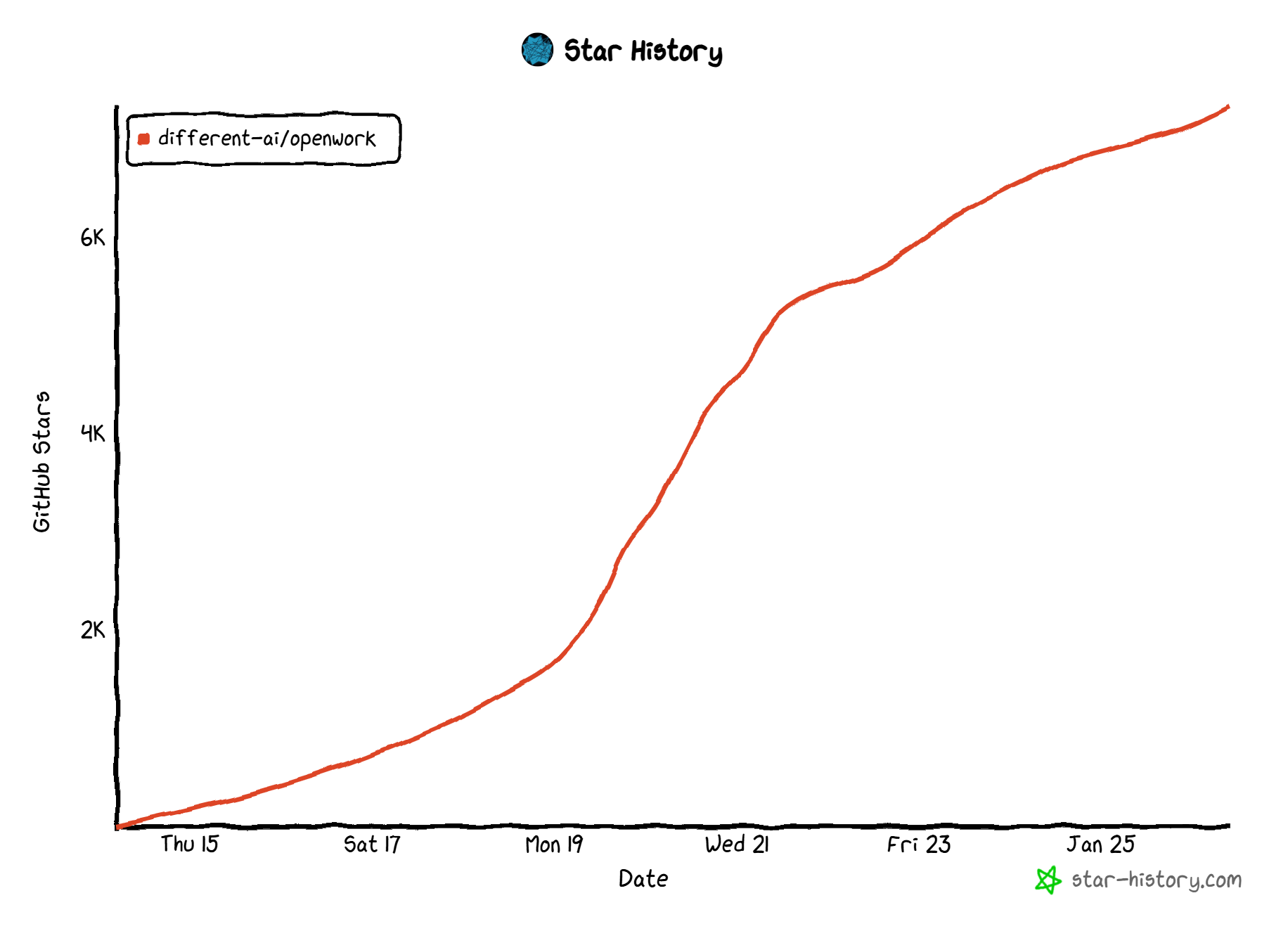
🧰 OpenWork (GitHub) 7.3k ☆ - Open source “Claude Work” for knowledge workers
The Scoop: OpenWork is an extensible, open-source desktop app that wraps OpenCode into a guided workflow for non-technical users. It focuses on making agentic work feel like a product, with workspaces, session runs, streaming progress, and permission prompts instead of a terminal-first interface.
Why It’s a Big Deal
It translates OpenCode-style agent workflows into a UI that non-developers can actually use day to day.
Host mode and client mode let teams run locally for privacy, or connect to remote OpenCode servers for shared infra.
Built-in permission surfacing and auditability make it easier to ship agentic workflows in real organizations.
Under the Hood
Built as a native desktop app using Tauri and Rust, with a TypeScript UI and OpenCode running under the hood.
Uses SSE event streaming to show realtime plan updates, progress, and permission requests.
Extends via OpenCode plugins and skills, managed through opencode.json at project or global scope.
OpenWork is the cleanest OSS attempt so far at turning “agent in a terminal” into a real end-user product without surrendering control to a bundled vendor suite.
🔭 ON THE RADAR
Stuff that’s hot and is trending at over 10K stars.
🌐 agent-browser (GitHub) 10.6k ☆ - Headless browser automation CLI for AI agents

The Scoop: agent-browser is a headless browser automation CLI designed specifically for AI agents. It provides a fast Rust CLI with a Node.js daemon that runs Playwright, plus an AI-friendly snapshot workflow using accessibility trees and deterministic element refs.
Why It’s a Big Deal
The snapshot plus refs workflow makes browser automation more reliable for agents than fragile CSS selectors.
A CLI-first interface makes it easy to plug into any agent harness, from Claude Code to Codex to OpenCode.
Provider support enables cloud browser execution when local browsers are not feasible in CI or serverless.
Under the Hood
Uses a Rust CLI for speed and a persistent Node.js daemon for Playwright session management.
Supports machine-readable JSON output for agents and deterministic refs like @e1, @e2 derived from snapshots.
Integrates with remote browser providers like Browserbase, Browser Use, and Kernel via a provider flag or env vars.
agent-browser is becoming the default “browser tool” layer for agent stacks that need deterministic UI interaction without reinventing Playwright wrappers.
🧠 oh-my-opencode (GitHub) 24.2k ☆ - Batteries-included agent harness for OpenCode
The Scoop: Oh My OpenCode is a heavy-duty OpenCode plugin that turns the agent into a multi-model orchestrator with curated subagents, LSP and AST tooling, background tasks, and a Claude Code compatibility layer. It is opinionated, feature-rich, and built to keep agents executing until the task is complete.
Why It’s a Big Deal
It packages orchestration patterns that usually live in private prompts into a reusable, installable harness.
Multi-agent delegation and background tasks reduce main-context bloat and make large codebases more tractable.
Claude Code compatibility makes it easier to migrate workflows and reuse skills, hooks, and MCP setups.
Under the Hood
Implemented almost entirely in TypeScript and designed as an OpenCode plugin with project and user config support.
Ships a hook system, curated MCPs, and LSP and AST-aware tooling for more deterministic refactors.
Includes a main agent setup (”Sisyphus”) with supporting agents for planning, debugging, docs, and exploration.
Oh My OpenCode is the clearest sign that agent harnesses are becoming their own product category, with OSS power users shipping the missing runtime layer around frontier models.
🧾 x-algorithm (GitHub) 13.6k ☆ - Open source “For You” feed recommendation system
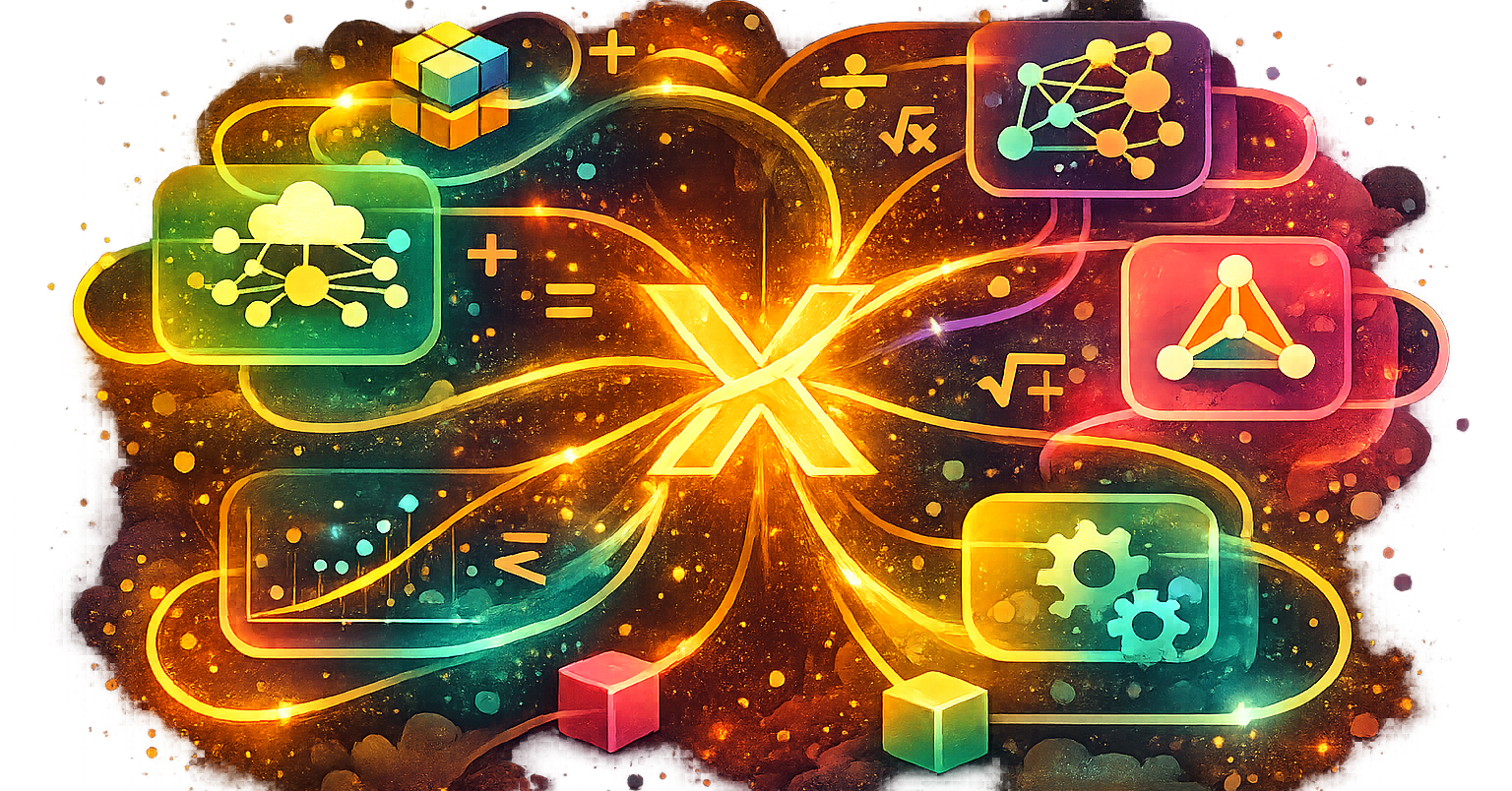
The Scoop: x-algorithm open-sources the core system powering the "For You" feed on X, combining in-network content from followed accounts with out-of-network retrieval from a global corpus. It ranks candidates using a Grok-based transformer that predicts engagement probabilities and composes them into a final weighted score.
Why It’s a Big Deal
It provides a real-world, production-grade recommendation pipeline reference instead of toy ranking examples.
The architecture shows how retrieval and ranking can be composed into a single system with explicit stages and interfaces.
The move away from hand-engineered features signals a shift toward transformer-first ranking as the default approach.
Under the Hood
Implemented primarily in Rust with components split into Home Mixer, Thunder, Phoenix, and Candidate Pipeline crates.
Uses a two-tower retrieval model for out-of-network discovery and a transformer ranker with candidate isolation.
Pipeline stages include hydration, filtering, multi-action scoring, selection, and post-selection visibility filtering.
x-algorithm is one of the most concrete open references for how modern transformer-based ranking systems are built, staged, and served at scale.
🔬 BELOW THE RADAR
Our hot picks for recent OSS projects to keep a close eye on for the future.
📈 ChartGPU (GitHub) 2.2k ☆ - WebGPU charting for high-performance rendering

The Scoop: ChartGPU is a TypeScript charting library built on WebGPU for smooth, interactive visualization when you have lots of data. It supports multiple chart types including candlesticks and can stream updates via appendData(...) for cartesian series.
Get started:
npm install chartgpu🤖 Ralph (GitHub) 7.8k ☆ - Autonomous agent loop for Amp and Claude Code
The Scoop: Ralph is an autonomous agent loop that runs AI coding tools (Amp or Claude Code) repeatedly until all PRD items are complete. Each iteration starts with clean context, and state persists through git history plus explicit artifacts like prd.json and progress.txt.
Get started: Copy ralph.sh plus CLAUDE.md (or prompt.md) into your repo, chmod +x, then run ./scripts/ralph/ralph.sh 10 (or ./scripts/ralph/ralph.sh --tool claude 10)
🧠 UltraRAG (GitHub) 4.3k ☆ - Low-code MCP framework for complex RAG pipelines

The Scoop: UltraRAG is a lightweight RAG development framework built around the Model Context Protocol architecture. It standardizes RAG components as MCP servers and orchestrates multi-step pipelines through YAML, with a UI that acts like a visual RAG IDE.
Get started: git clone the repo, then uv sync (or uv sync --all-extras), then ultrarag run examples/sayhello.yaml (Docker option available)
Repository Radar is brought to you by Alexander, a Partner at Picus Capital, and Claudius, the co-founder of Index Labs. In this Substack, we focus on software infrastructure and open-source innovation in AI and beyond, tracking major trends while uncovering the hidden gems shaping the future of technology.