
Repository Radar - PR#27
Keeping an eye on the world of OSS software - one scan at a time


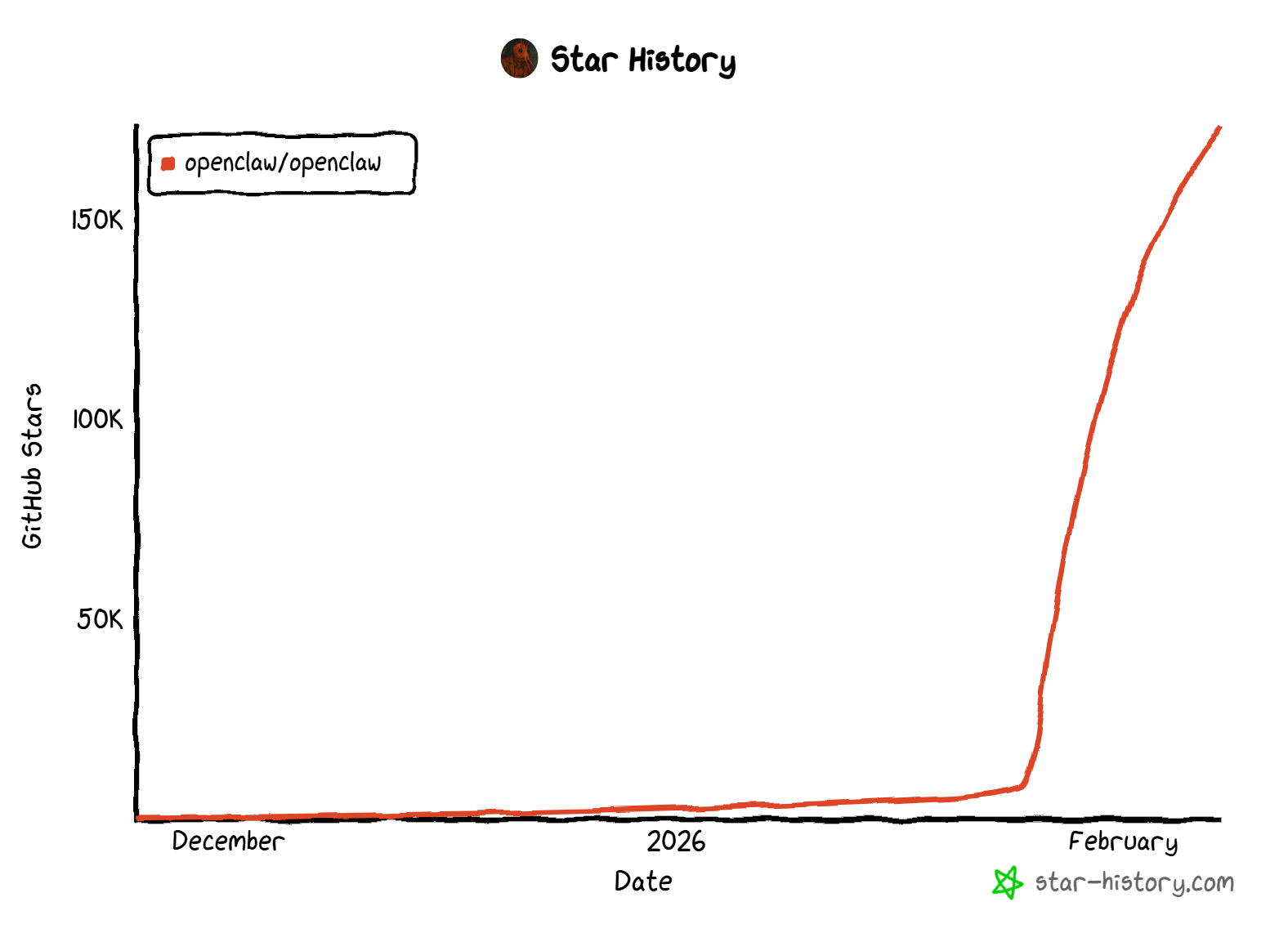
Welcome to PR #27 of Repository Radar - your no-fluff scan of open-source software infrastructure. If you’ve been anywhere near tech Twitter, Hacker News, or a German YouTube comments section in the past two weeks, you already know what this issue is about: OpenClaw. What started as a weekend WhatsApp relay hack by PSPDFKit founder Peter Steinberger has exploded into 183k GitHub stars, experts calling it “World’s most dangerous software” and an entire ecosystem of projects that now orbit it. This issue maps that ecosystem - from the lightweight reimplementations and memory layers that make always-on agents actually work, to the orchestration frameworks and retrieval systems that complete the stack.
📡 ABOVE THE RADAR (aka the BFD)
In “above the radar” we take a look at some of the big splash software infrastructure announcements and go on the hunt for OSS that are similar.
Let’s not dance around it: OpenClaw is the most viral open-source project in recent memory. 183k stars. 2 million visitors in a single week. Three name changes (Clawdbot → Moltbot → OpenClaw) after Anthropic’s legal team had a word. A malicious VS Code extension that appeared within hours of a rename. Crypto scammers snatching abandoned Twitter handles. The hype cycle hit every beat, and somehow the project came out the other side stronger.
But strip away the drama and what you actually have is a long-running Node.js gateway that sits on your machine and connects AI models to your messaging apps - WhatsApp, Telegram, Slack, Discord, Signal, iMessage, Teams, you name it. You talk to it through the apps you already use. It can read and write files, run scripts, control browsers, schedule cron jobs, and extend itself by writing its own skills. It’s your assistant, your machine, your keys. That’s the pitch.
What makes OpenClaw worth tracking beyond the hype is the positioning shift. Steinberger now explicitly describes it as infrastructure, not an app. The trajectory - from “WhatsApp Relay” to personal assistant to model-agnostic agentic infrastructure - mirrors where the entire space is heading. OpenClaw is betting that the future of AI isn’t a new app, it’s AI embedded in the apps you already use. Whether that bet is right or catastrophically premature depends on whether the security story catches up to the capability story. Right now, it hasn’t.
That gap is exactly what makes the ecosystem around OpenClaw so interesting. Projects are emerging to solve the parts that OpenClaw itself punts on - memory that actually scales for 24/7 agents, lightweight reimplementations you can actually audit, orchestration layers that handle multi-agent coordination. The rest of this issue covers the ones worth watching.
🧰 OpenClaw (GitHub) 183k ☆ - Your own personal AI assistant. Any OS. Any platform. The lobster way. 🦞

The Scoop: OpenClaw is a self-hosted, model-agnostic AI agent that runs as a Node.js gateway on your own machine and connects to the messaging apps you already use. You talk to it through WhatsApp, Telegram, Slack, Discord, Signal, iMessage, or Teams - and it can read and write files, run shell commands, control browsers, schedule tasks via cron, and extend its own capabilities by writing new skills autonomously. Originally launched as “Clawdbot” in November 2025 by Peter Steinberger (of PSPDFKit fame), it went through two renames and three security incidents on its way to becoming one of the fastest-growing open-source projects ever.
Why It’s a Big Deal
It reframes the personal AI assistant as local infrastructure rather than a SaaS product - your machine, your keys, your data, no subscription beyond the model API cost.
Multi-channel inbox with multi-agent routing means you can run isolated agents per channel, each with their own workspace and session context.
The skills and plugin system lets the agent self-improve by writing code to handle tasks it couldn’t do before, which is both the most powerful and most terrifying part.
Under the Hood
Long-running Node.js service with a WebSocket control plane that manages sessions, presence, config, cron, webhooks, and a web-based Control UI.
Supports any LLM provider (Anthropic, OpenAI, xAI/Grok, local models via Ollama) with explicit recommendation for Opus 4.6 for prompt-injection resistance.
Ships with onboarding wizard, macOS menu bar companion, iOS/Android nodes, voice wake mode via ElevenLabs, and a Live Canvas for agent-driven visual workspaces.
OpenClaw is not a polished product - it’s a fast-moving, sometimes dangerous, community-driven agent runtime that has outgrown its weekend-project origins. Whether it becomes the Linux of personal AI or flames out under the weight of its own security surface area depends entirely on what happens in the next six months.
🔭 ON THE RADAR
Stuff that’s hot and is trending at over 10K stars.
🧰 ChatDev 2.0 (GitHub) 30k ☆ - Zero-code multi-agent orchestration platform
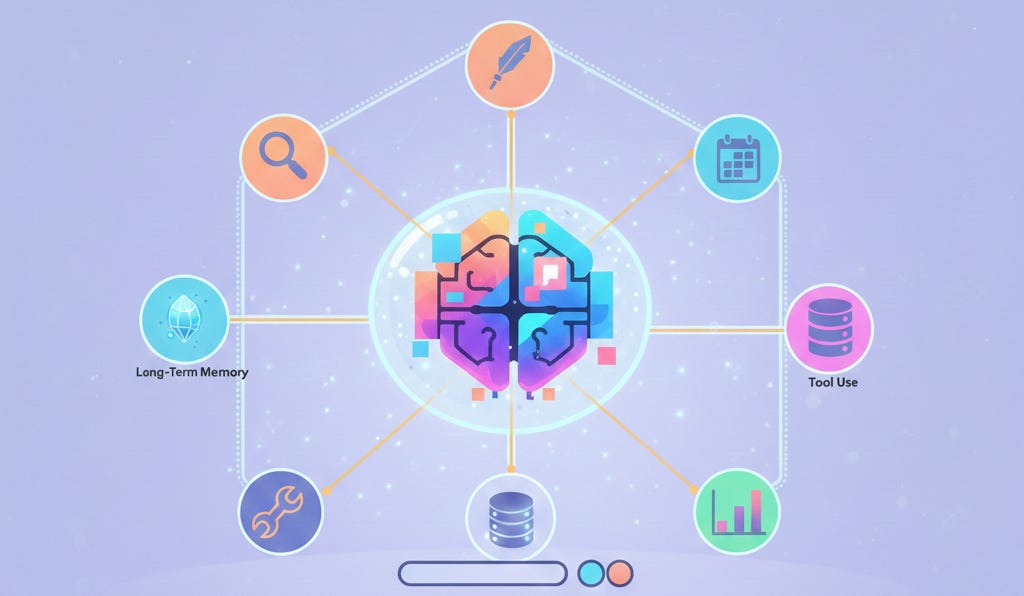
The Scoop: ChatDev started in 2023 as a research demo - a “virtual software company” where LLM agents playing CEO, CTO, and Programmer would talk to each other to build software. Cute, but limited. The 2.0 release in January 2026 is a different animal entirely. Rebranded as DevAll, it’s now a zero-code multi-agent platform where you define agent workflows in YAML, pick from pre-built or custom agent roles, and launch them from a visual interface. Software development is just one template among many.
Why It’s a Big Deal
It went from “fun research demo” to a general-purpose agent orchestration layer - you can wire up multi-agent pipelines for data analysis, content generation, or any structured task, not just coding.
YAML-based workflow definitions mean non-developers can build and modify agent pipelines without touching Python.
The MacNet branch supports collaboration topologies with 1,000+ agents without blowing context limits, backed by an ICLR 2025 paper.
Under the Hood
Built in Python with a ChatChain architecture that composes Phases (units of work) into configurable pipelines, each with its own agent roles and prompts.
Ships a web visualizer that replays agent conversations and renders the full workflow as an interactive diagram.
Supports per-phase LLM routing (different models for different agent roles) and includes Git-mode for automatic version control of generated artifacts.
ChatDev 2.0 is the clearest sign that multi-agent orchestration is becoming a product category of its own, separate from the models and separate from the end-user assistants like OpenClaw that consume it.
🤖 nanobot (GitHub) 15.9k ☆ - The ultra-lightweight Clawdbot

The Scoop: nanobot is what happens when an academic lab looks at OpenClaw’s 170k-line codebase and says “we can do this in 4,000 lines.” Built by the Data Intelligence Lab at HKU, it reimplements the core OpenClaw agent loop - LLM-driven task execution, tool use, cron jobs, persistent memory, subagents, multi-channel messaging - in clean, readable Python. It’s explicitly positioned as a research-ready alternative: same concept, 99% less code.
Why It’s a Big Deal
You can actually read and understand the entire agent loop in an afternoon, which makes it a real starting point for research and customization rather than a black box.
Supports the same provider ecosystem (OpenRouter, Anthropic, local models via vLLM) and channel integrations (Telegram, WhatsApp) without the infrastructure overhead.
Docker and pip install paths mean you go from zero to working agent in about two minutes, no wizard required.
Under the Hood
Pure Python with a clean separation:
agent/loop.pyfor the core LLM↔tool cycle,agent/memory.pyfor persistence,agent/subagent.pyfor background task delegation.Config lives in a single
~/.nanobot/config.json- one file, no YAML hierarchy, no env var maze.Ships built-in tools for browser automation, file operations, and shell access, with a skills loader for extending via custom tool definitions.
nanobot is to OpenClaw what Alpine Linux is to Ubuntu - stripped to the essentials, designed to be understood, and built for people who want to know exactly what’s running on their machine.
🧩 cognee (GitHub) 12.2k ☆ - Memory infrastructure for AI agents
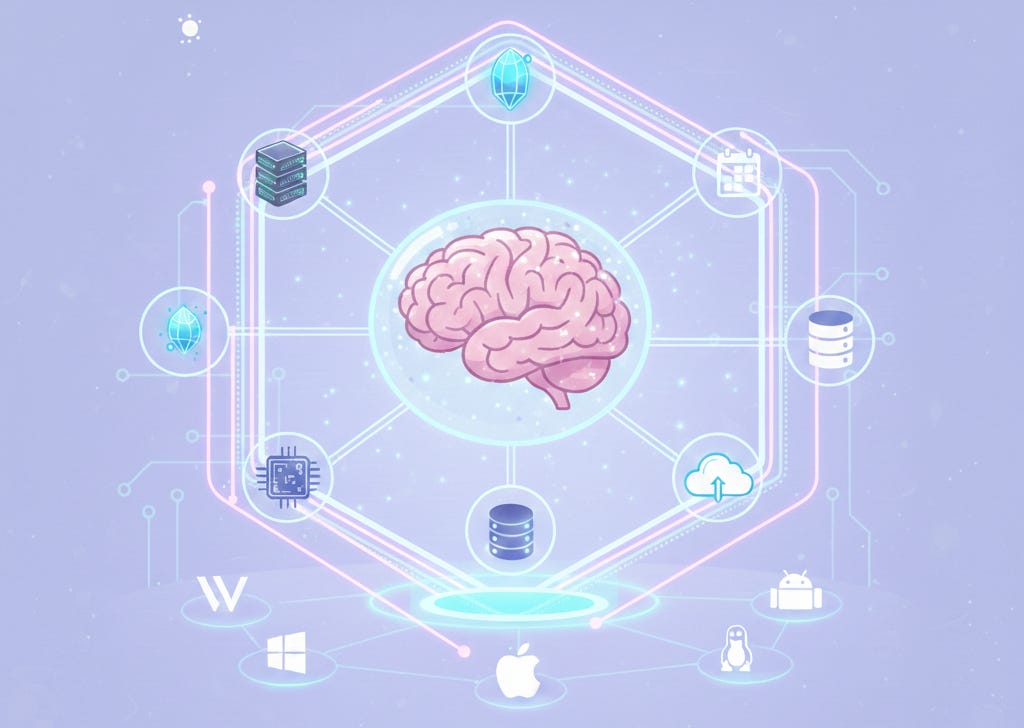
The Scoop: cognee replaces traditional RAG with a unified memory layer built on knowledge graphs and vector search. Its ECL pipeline (Extract, Cognify, Load) ingests from 30+ data sources - conversations, files, images, audio transcriptions - and builds a structured graph that agents can query through MCP. Where most RAG setups chunk text and hope cosine similarity finds the right passage, cognee turns your data into a web of entities and relationships that agents can actually reason over. Think of it as the plumbing layer: less flashy than a personal assistant, but the thing that makes retrieval actually accurate.
Why It’s a Big Deal
It unifies vector search and graph databases into a single memory layer, so documents are both searchable by meaning and connected by relationships - not one or the other.
Graduated from GitHub’s Secure Open Source Program, which matters when you’re building the memory layer that production AI systems depend on.
Ships an MCP server out of the box, which means any MCP-compatible agent (Claude Code, OpenClaw, Cursor) can use cognee as its memory backend without custom integration work.
Under the Hood
Python framework with modular pipelines: add data, cognify it (extract entities, build graphs, generate embeddings), then search across the resulting knowledge structure.
Supports Neo4j, Kuzu, and NetworkX for graph storage and PostgreSQL, Qdrant, or Weaviate for vectors - swap backends without changing application code.
CLI, FastAPI server, and a Next.js frontend for browsing the knowledge graph visually, plus full Docker support for self-hosted deployment.
cognee is the kind of infrastructure project that doesn’t go viral but quietly becomes load-bearing. If the agent ecosystem keeps growing at this pace, the memory layer underneath it needs to be this solid.
🔬 BELOW THE RADAR
Our hot picks for recent OSS projects to keep a close eye on for the future.
🧠 memU (GitHub) 8.8k ☆ - Memory for 24/7 proactive agents

The Scoop: memU is a memory framework built specifically for the kind of always-on, proactive agents that OpenClaw represents. The core problem it tackles: keeping an agent online 24/7 burns through LLM tokens fast, and naive context stuffing doesn’t scale. memU structures memory as a hierarchical file system - Resource Layer → Memory Item Layer → Category Layer - and uses continuous learning to build long-term understanding of user intent without bloating the context window.
Get started: run git clone https://github.com/gavrielc/nanoclaw.git and cd nanoclaw and claude
🦀 nanoclaw (GitHub) 6.9k ☆ - Security-first minimal OpenClaw alternative
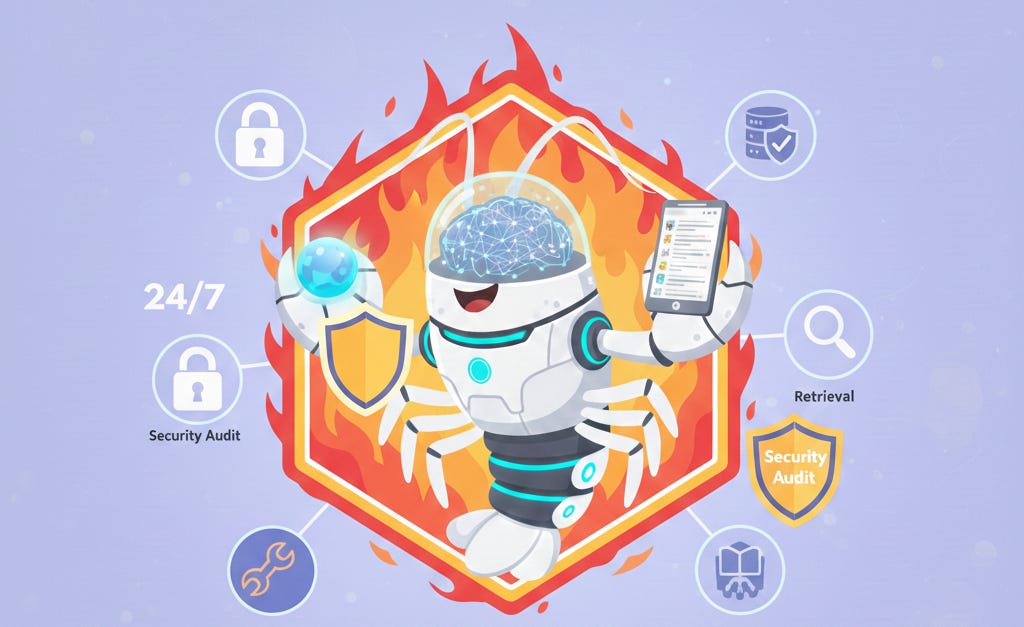
The Scoop: nanoclaw takes the opposite approach to OpenClaw’s kitchen-sink philosophy. It’s a handful of source files you can read in 8 minutes, built on Anthropic’s Agents SDK, and - crucially - runs agents inside Apple Containers (or Docker) with real filesystem isolation instead of permission prompts. Setup is literally git clone then telling Claude Code to run /setup. Instead of PRs that add features, it uses Claude Code skill files that teach users how to transform their own fork. Opinionated, minimal, and the only OpenClaw alternative that treats security as an architecture decision rather than an afterthought.
Get started: git clone https://github.com/gavrielc/nanoclaw.git && cd nanoclaw && claude, then run /setup
📑 PageIndex (GitHub) 14.6k ☆ - Vectorless, reasoning-based RAG
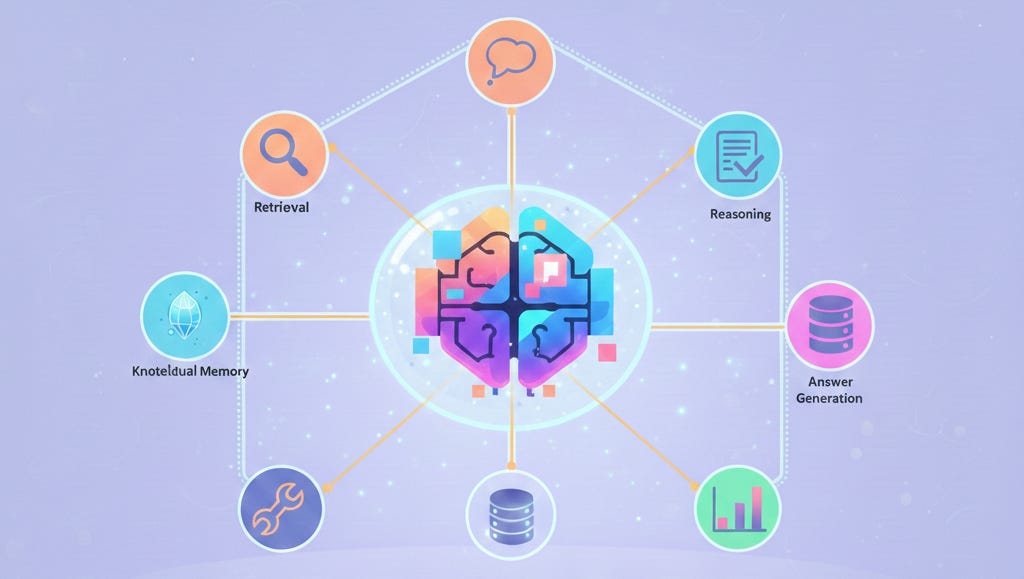
The Scoop: PageIndex throws out the vector database entirely. Instead of chunking documents and doing similarity search, it builds a hierarchical tree index (like a table of contents) and uses LLM reasoning to navigate that tree - the way a human expert would flip through a report to find what they need. Inspired by AlphaGo’s tree search, it hit 98.7% accuracy on FinanceBench, which is state-of-the-art for financial document QA. Available as a self-hosted framework, an MCP server, or a hosted chat platform.
Get started: pip install pageindex, then check out the Vectorless RAG cookbook notebook on GitHub.
Repository Radar is brought to you by Alexander, a Partner at Picus Capital, and Claudius, the co-founder of Index Labs. In this Substack, we focus on software infrastructure and open-source innovation in AI and beyond, tracking major trends while uncovering the hidden gems shaping the future of technology.