
Repository Radar - PR#28
Keeping an eye on the world of OSS software - one scan at a time


Welcome to PR #28 of Repository Radar - your no-fluff scan of open-source software infrastructure. This issue looks at what happens after a breakout OSS moment becomes infrastructure. OpenClaw keeps expanding its influence, while a wave of lightweight “claw variants” and adjacent tooling is emerging around it. From OpenClaw itself to nanoclaw, picoclaw, KittenTTS, llmfit, LobsterAI, and PentAGI, this issue tracks how ecosystems form once a single repo becomes a reference point for an entire category.
📡 ABOVE THE RADAR (aka the BFD)
In “above the radar” we take a look at some of the big splash software infrastructure announcements and go on the hunt for OSS that are similar.
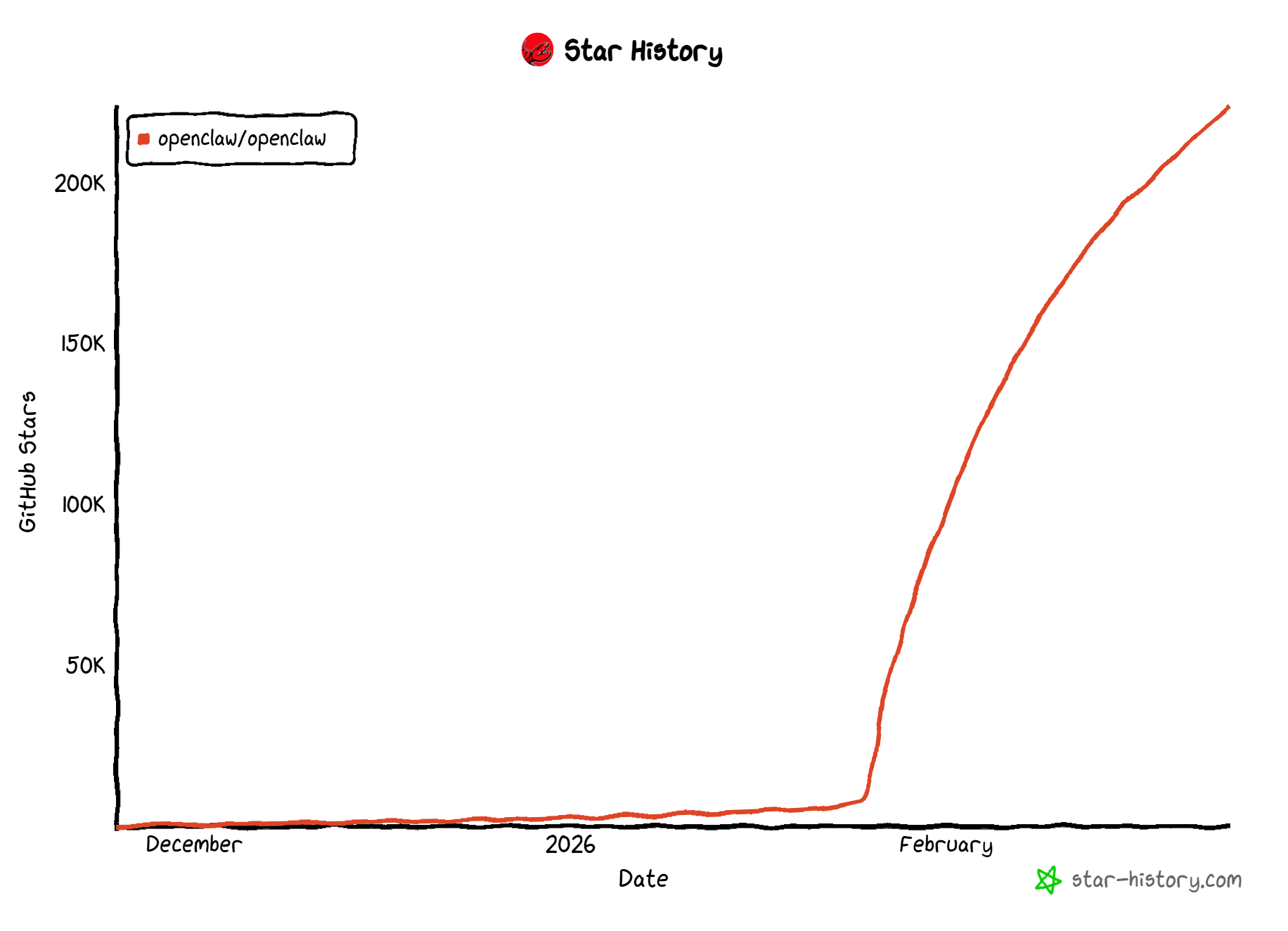
We cannot stop talking about OpenClaw. Few open-source projects have grown this fast, and few illustrate as clearly what OSS now represents in AI:
Some two weeks ago, OpenClaw-creator Peter Steinberger published an update that changes the OpenClaw story once again. He is joining OpenAI “to work on bringing agents to everyone,” while OpenClaw is planned to move into a foundation and remain open and independent. The framing is clear: keep the project OSS, but pair it with access to frontier research and broader distribution.
That is why we are covering OpenClaw again - for the third time in Repository Radar. In PR27 we described it as the most viral OSS project in recent memory. The trajectory since then reinforces the same point: OpenClaw has moved from a weekend experiment into infrastructure. The open question now is whether this is the final chapter of the original story, or the start of a more institutional phase under foundation governance.
The scale explains why this matters. Within roughly 3 months, OpenClaw climbed to rank 14 on GitHub by stars at around 222k stars, sitting above projects like Linux in that snapshot, while carrying thousands of open issues. That combination - explosive adoption plus operational load - is exactly what pushes ecosystems to split. Lightweight alternatives and focused reimplementations start appearing to reduce complexity, improve security posture, or make the core agent loop easier to understand.
That is the lens for this issue: projects that rose in the shadow of OpenClaw’s success. Instead of competing head-on, many are shrinking the surface area, tightening scope, or specializing around specific workflows. The ecosystem is no longer about one assistant, but about multiple ways to run the same underlying idea.
🧰 OpenClaw (GitHub) 222k ☆ - Personal AI assistant infrastructure across messaging platforms

The Scoop: OpenClaw is a self-hosted, model-agnostic AI agent runtime that connects to messaging apps like WhatsApp, Telegram, Slack, Discord, Signal, iMessage, and Teams. Running as a long-lived gateway on your machine, it can execute tools, manage files, run scripts, schedule tasks, and extend itself through skills. In February 2026, creator Peter Steinberger announced he is joining OpenAI while OpenClaw transitions toward foundation governance to remain open and independent.
Why It’s a Big Deal
It reframes the personal assistant as local infrastructure rather than a SaaS product, putting control of data and execution back on the user side.
The move toward foundation governance signals how quickly OSS agent runtimes are becoming ecosystem-level projects rather than single-maintainer repos.
Its scale and visibility have triggered a wave of smaller, more opinionated variants that now define the next phase of experimentation.
Under the Hood
Long-running runtime that connects messaging channels, LLM providers, and local tools into a unified execution loop.
Model-agnostic architecture supporting cloud and local models with extensibility through skills and plugins.
Operational reality at scale: roughly 222k stars and thousands of open issues, making governance and security architecture core challenges.
OpenClaw is no longer just a project - it is the substrate that other projects now react to, simplify, or rebuild in their own image.
🔭 ON THE RADAR
Stuff that’s hot and is trending at over 10K stars.
🐱 KittenTTS (GitHub) 10.9k ☆ - Lightweight text-to-speech for local AI workflows

The Scoop: KittenTTS is a compact text-to-speech system designed for fast local inference. It focuses on producing natural speech while keeping the runtime small enough to run alongside local agent stacks without heavy infrastructure.
Why It’s a Big Deal
Local TTS removes a major dependency for fully self-hosted agents.
Small runtime footprint makes voice interfaces practical on commodity hardware.
Fits naturally into agent workflows that need fast voice output without cloud latency.
Under the Hood
Optimized neural TTS pipeline designed for efficient local inference.
Lightweight model design aimed at low-resource environments.
Simple integration path for agent frameworks and automation scripts.
KittenTTS is part of the shift toward local-first agent stacks where voice becomes just another tool call.
🦀 nanoclaw (GitHub) 13.6k ☆ - Security-first minimal OpenClaw alternative

The Scoop: nanoclaw is a minimal reimplementation of the OpenClaw concept, focused on readability and security. It keeps the core agent loop while reducing complexity and emphasizing isolation.
Why It’s a Big Deal
Smaller codebase makes auditing and experimentation easier.
Security-first architecture uses isolation instead of permission prompts.
Shows how OSS ecosystems rapidly spawn minimalist variants after breakout success.
Under the Hood
Built around Anthropic’s Agents SDK with a minimal structure.
Containerized execution boundaries.
Extension model based on skill files instead of heavy plugin systems.
nanoclaw represents the “minimal fork” phase that often follows large OSS projects.
🧩 picoclaw (GitHub) 12.1k ☆ - Ultra-lightweight personal agent runtime

The Scoop: picoclaw pushes the lightweight philosophy further, aiming for an ultra-small runtime that preserves the core OpenClaw interaction model while minimizing dependencies and complexity.
Why It’s a Big Deal
Demonstrates rapid experimentation around the OpenClaw pattern.
Prioritizes portability and fast onboarding.
Encourages modular agent architecture over monolithic runtimes.
Under the Hood
Minimal runtime focused on core messaging and tool execution.
Low dependency footprint.
Simple extension model for rapid customization.
picoclaw shows how ecosystems compress complexity once a reference implementation becomes dominant.
🔬 BELOW THE RADAR
Our hot picks for recent OSS projects to keep a close eye on for the future.
🧠 llmfit (GitHub) 3.7k ☆ - Lightweight fine-tuning workflows for LLMs

The Scoop: llmfit simplifies model fine-tuning workflows, aiming to reduce the configuration overhead required to adapt models for specific tasks or domains.
Get started:
pip install llmfit🦞 LobsterAI (GitHub) 1.9k ☆ - Modular AI agent experimentation framework

The Scoop: LobsterAI provides a modular environment for experimenting with agent workflows and tool integrations, emphasizing composability over rigid orchestration.
Get started: clone the repo (git clone https://github.com/netease-youdao/LobsterAI.git) and follow the quickstart guide in the README.
🕷️ PentAGI (GitHub) 7.9k ☆ - Autonomous offensive security agent

The Scoop: PentAGI is an AI-driven penetration testing framework that automates offensive security workflows using agent-style execution loops.
Get started: it clone the repo and run via Docker or local setup.
Repository Radar is brought to you by Alexander, a Partner at Picus Capital, and Claudius, the co-founder of Index Labs. In this Substack, we focus on software infrastructure and open-source innovation in AI and beyond, tracking major trends while uncovering the hidden gems shaping the future of technology.