
Repository Radar - PR#3
Keeping an eye on the world of OSS software - one scan at a time


Welcome back to PR#3 of Repository Radar, your go-to pulse check on the latest moves in software infrastructure and open-source innovation. This week, we dive into Microsoft's AutoGen, an influential open-source framework simplifying multi-agent AI workflows. Plus, we explore trending projects like Devika for autonomous coding, Fabric for intelligent task automation, and Scrapegraph-ai for smarter web scraping. Lastly, we spotlight emerging OSS projects SmallPond, CSM, and Claude-Code, promising major impacts on efficiency and developer productivity.
📡 ABOVE THE RADAR (aka the BFD)
In “above the radar” we take a look at some of the big splash software infrastructure announcements and go on the hunt for OSS that are similar.
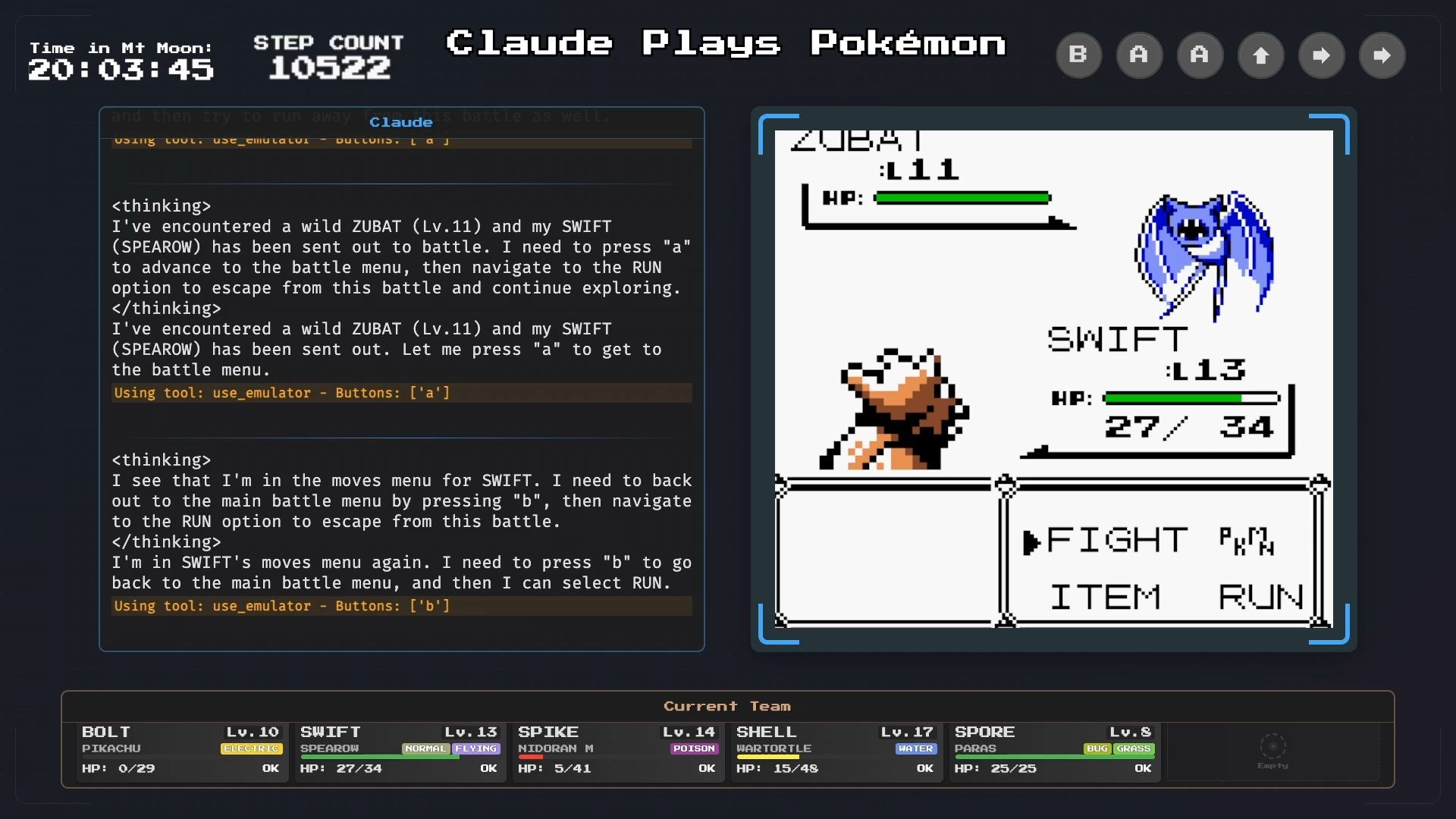
The AI landscape continues to transform at an incredible pace, with recent events underscoring just how dynamic and creative these systems can be. Anthropic's groundbreaking Twitch stream - Claude Plays Pokémon - featured their Claude AI model actively participating in live Pokémon gameplay, interpreting complex commands and adapting strategies in real-time, demonstrating not just problem-solving capabilities but genuine entertainment value through interactive gaming.
In the enterprise world, MongoDB's strategic acquisition of Voyage AI signals a pivotal shift toward embedding AI-driven insights directly into core database functionality. This move promises smarter data management across the board, from automated schema recommendations to predictive query optimisation - highlighting the crucial fusion of modern data infrastructure with artificial intelligence. Meanwhile, as shown by Lovable.dev's recent Series A announcement, investor confidence in AI-first solutions continues to deepen. This surge in AI-focused funding is reshaping the landscape of infrastructure, services, and developer tools, fuelling increasingly sophisticated, enterprise-ready AI offerings.
Below, we explore Microsoft's AutoGen - a great open-source framework pushing the boundaries of multi-agent AI workflows and offering a glimpse into how coordinated AI agents might power the next era of intelligent systems.
⌨ AutoGen (GitHub) 40.7k ☆ - Automate Complex Workflows with Multi-Agent LLMs

The Scoop: AutoGen is an open-source Python framework developed by Microsoft, designed to simplify building complex, automated workflows using multiple AI agents powered by large language models (LLMs). It enables dynamic collaboration among AI agents to solve tasks that typically require extensive human oversight.
Why It's a Big Deal
Provides an open-source, scalable solution for automating complex cognitive tasks through coordinated AI agents.
Enables developers to orchestrate sophisticated, multi-agent interactions, significantly reducing manual interventions.
Supports integration with leading LLMs (like GPT-4), enhancing flexibility and performance across diverse applications.
Reduces dependency on proprietary multi-agent frameworks, democratising access to advanced automation capabilities.
Allows for easy experimentation, rapid prototyping, and deployment of advanced AI workflows with minimal setup.
Under the Hood
Built on Python, facilitating easy adoption and integration into existing codebases.
Supports direct integration with popular LLMs through frameworks like LangChain, making it versatile across AI ecosystems.
Enables creation of customisable agents and workflows, allowing detailed control over AI-driven processes.
Includes tools for robust debugging, logging, and monitoring of multi-agent interactions.
Designed with modularity and extensibility, empowering developers to enhance and scale their AI-driven automation seamlessly.
AutoGen positions itself as a powerful and flexible open-source framework for AI-driven automation, making complex, multi-agent workflows more accessible and efficient. Given the ongoing growth in AI-driven process automation, expect increased attention and adoption of AutoGen in the developer and enterprise communities.
🔭 ON THE RADAR
Stuff that’s hot and is trending at over 10K stars.
🕸️ Scrapegraph-ai (GitHub) 18.4k ☆ - Web Scraping Enhanced by LLMs

The Scoop: Scrapegraph-ai leverages large language models to transform web scraping, enabling smarter, context-aware extraction of data from diverse web sources.
Why It's a Big Deal
Dramatically improves scraping accuracy through advanced contextual understanding.
Simplifies data extraction workflows by automating complex scraping tasks.
Enhances flexibility by supporting dynamic web content scraping.
Reduces reliance on traditional scraping tools and manual intervention.
Under the Hood
Built on robust LLM frameworks to interpret and analyse web page content.
Implements AI-driven decision-making to adaptively scrape complex pages.
Provides straightforward APIs for easy integration into existing data pipelines.
Includes pre-built examples for rapid deployment and experimentation.
🤖 Devika (GitHub) 19k ☆ - Agentic AI Software Engineer
The Scoop: Devika is an intelligent AI agent that comprehensively understands human instructions, systematically breaks them down, conducts thorough research, and autonomously writes accurate code to accomplish specific objectives.
Why It's a Big Deal
Streamlines software development by autonomously handling complex coding tasks.
Enhances productivity by automating iterative research and coding processes.
Capable of translating human instructions into actionable, efficient code.
Empowers teams to rapidly prototype and deliver software solutions.
Under the Hood
Utilizes advanced natural language understanding to interpret nuanced instructions.
Integrates cutting-edge agentic AI architectures for autonomous coding.
Supports continuous learning to refine task execution over time.
Offers interactive interfaces for seamless integration into developer workflows.
🔗 Fabric (GitHub) 29.7k ☆ - AI-Powered Task Completion

The Scoop: Fabric connects seamlessly with your data and content, using AI to intelligently complete a variety of tasks with accuracy and efficiency.
Why It's a Big Deal
Enables quick integration of AI into existing data and content workflows.
Automates tasks across diverse contexts without extensive setup.
Streamlines workflows by intelligently interpreting and responding to task requirements.
Scalable solution suitable for both small projects and enterprise applications.
Under the Hood
Built with a lightweight yet powerful AI core for rapid task execution.
Integrates smoothly with diverse content and data platforms.
Employs advanced natural language processing to clearly understand user intent.
Easy-to-use interfaces facilitate straightforward deployment and usage.
🔬 BELOW THE RADAR
Our hot picks for recent OSS projects to keep a close eye on for the future.
📌 SmallPond (GitHub) 2.3k ☆ - Scalable, Efficient LLM Fine-tuning

The Scoop: Smallpond is a lightweight data processing framework built on DuckDB and 3FS, designed for high-performance and scalable data analysis. It can efficiently process petabyte-scale datasets and offers easy-to-use operations without needing complex, long-running services. In testing, Smallpond achieved an average throughput of 3.66 TiB/min, sorting 110.5 TiB of data in roughly 30 minutes. It supports Python versions 3.8 to 3.12.
Get started: Install SmallPond via Docker and start fine-tuning your LLM models quickly and efficiently:
pip install smallpond🚀 Claude-Code (GitHub) 5.3k ☆ - Advanced Code Generation with Anthropics AI

The Scoop: Claude-Code is a state-of-the-art code generation tool leveraging advanced large language models developed by Anthropic. It excels at generating clear, maintainable, and efficient code, significantly speeding up development workflows. Ideal for software engineers aiming to boost productivity and code quality.
Get started: Clone the repository, set up the environment, and immediately leverage Claude-Code's advanced code-generation capabilities in your
npm install -g @anthropic-ai/claude-code📚 olmOCR (GitHub) 7.8k ☆ - Toolkit for linearizing PDFs for LLM datasets/training

The Scoop: olmOCR is a powerful toolkit developed by AllenAI for processing and linearizing PDF documents to make them suitable for training language models. It supports large-scale PDF processing with features for text extraction, parsing, and formatting to help AI models better understand document structure.
Requirements:
NVIDIA GPU with at least 20GB of GPU RAM (tested on RTX 4090, L40S, A100, H100)
30GB of free disk space
Get started: Install the package with conda and pip, then use the pipeline module to process your PDFs locally or scale to multiple nodes with AWS S3 integration.
git clone https://github.com/allenai/olmocr.git
cd olmocr
pip install -e
Repository Radar is brought to you by Alexander, a Partner at Picus Capital, and Claudius, an Investor there. In this Substack, we focus on software infrastructure and open-source innovation in AI and beyond, tracking major trends while uncovering the hidden gems shaping the future of technology.