
Repository Radar - PR#30
Keeping an eye on the world of OSS software - one scan at a time


Welcome to PR #30 of Repository Radar - your no-fluff scan of open-source software infrastructure. In this issue, we start with a new market map: Hugging Face’s “State of Open Source on Hugging Face: Spring 2026” report. It makes the case that open-source AI is no longer just where models get released - it is where they get adapted, deployed, and turned into products and workflows. It also shows how quickly the center of gravity is shifting, with Chinese open models gaining share and families like Qwen becoming base layers for a broader downstream ecosystem. From there, we zoom in on the projects that best capture where open-source AI is heading - from Qwen3 as a default base layer for downstream AI to autoresearch, CLI-Anything, paperclip, Crucix, impeccable, and openui.
📡 ABOVE THE RADAR (aka the BFD)
In “above the radar” we take a look at some of the big splash software infrastructure announcements and go on the hunt for OSS that are similar.
In this issue, we are doing something a bit different, we are starting from a market map: Hugging Face’s new “State of Open Source on Hugging Face: Spring 2026” report, released in mid-March. And the picture it paints is hard to ignore.
The report argues that open-source AI is no longer a side lane to frontier AI - it is increasingly where practical AI development happens. Hugging Face went from roughly 1.8m public models and 450k public datasets in 2024 to around 13m users, 2m+ public models, and 500k+ public datasets in 2025, with users creating not just downloads but derivative artifacts: fine-tunes, adapters, benchmarks, and applications. That is the key shift. Open source is no longer just a release mechanism for labs. It is the execution layer where models get adapted, deployed, and redistributed into real workflows.
The biggest story in the report is geographic. China has now overtaken the US in both monthly and overall Hugging Face downloads, with Chinese models accounting for 41% of downloads over the past year. DeepSeek may have been the symbolic turning point, but the broader signal is more important: Chinese organizations like Baidu, ByteDance, Tencent, and Alibaba are now shaping the open model layer at a pace the rest of the ecosystem has to respond to.
That matters because distribution in open source increasingly compounds through reuse. Alibaba’s Qwen family alone has spawned more than 113k derivative models, and more than 200k tagged variants if you count the broader ecosystem around it. In other words, leading open models are no longer just endpoints - they are base layers for thousands of downstream products, wrappers, quantizations, fine-tunes, and domain-specific systems. If OpenClaw showed what viral OSS looks like in agent infrastructure, Qwen shows what platform gravity looks like in open models.
That is the lens for this issue: not one repo taking over GitHub, but a broader handoff in where open-source AI momentum now sits. The next phase may be defined less by who trains the single best model, and more by who becomes the default substrate everyone else builds on.
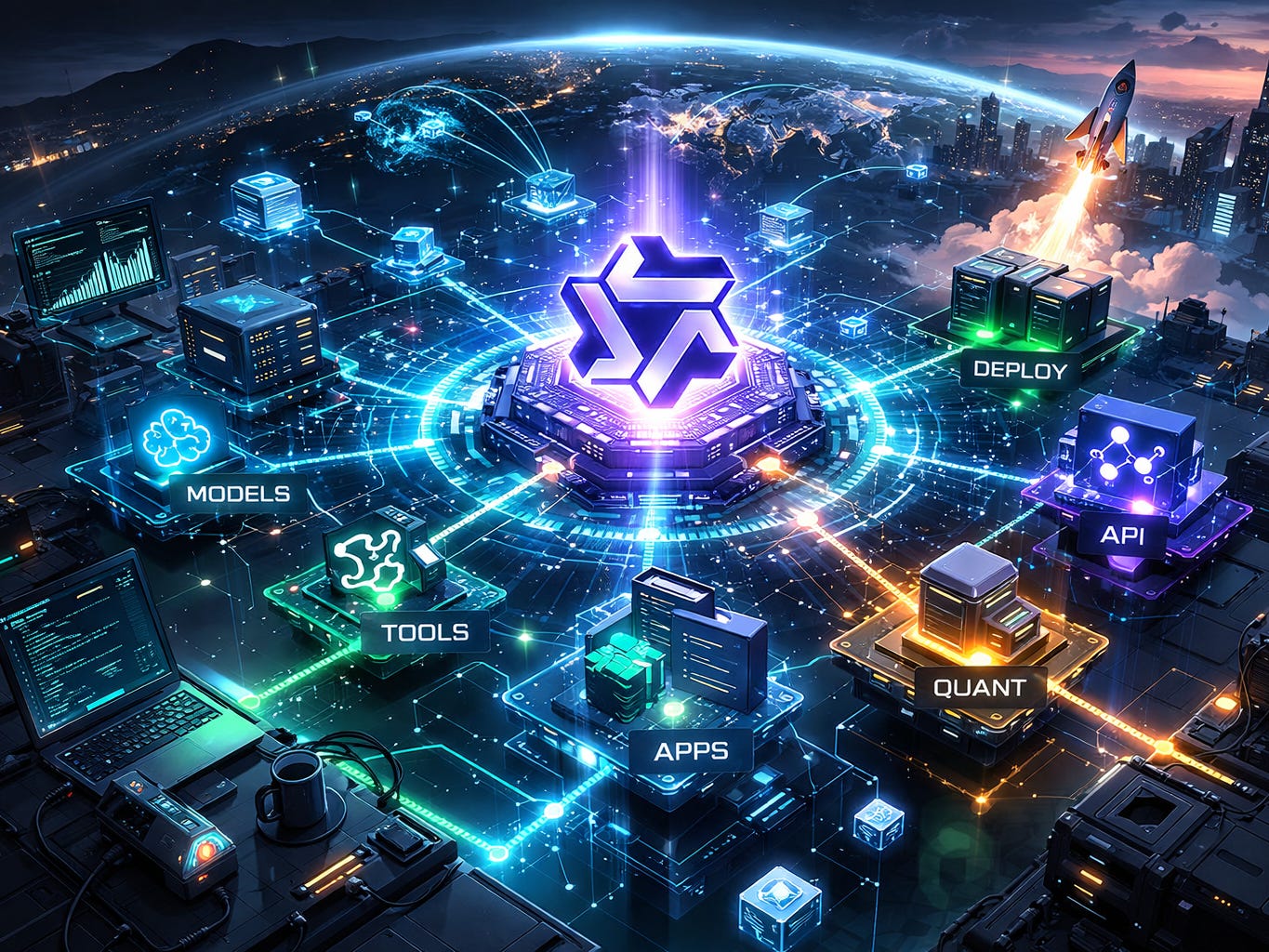
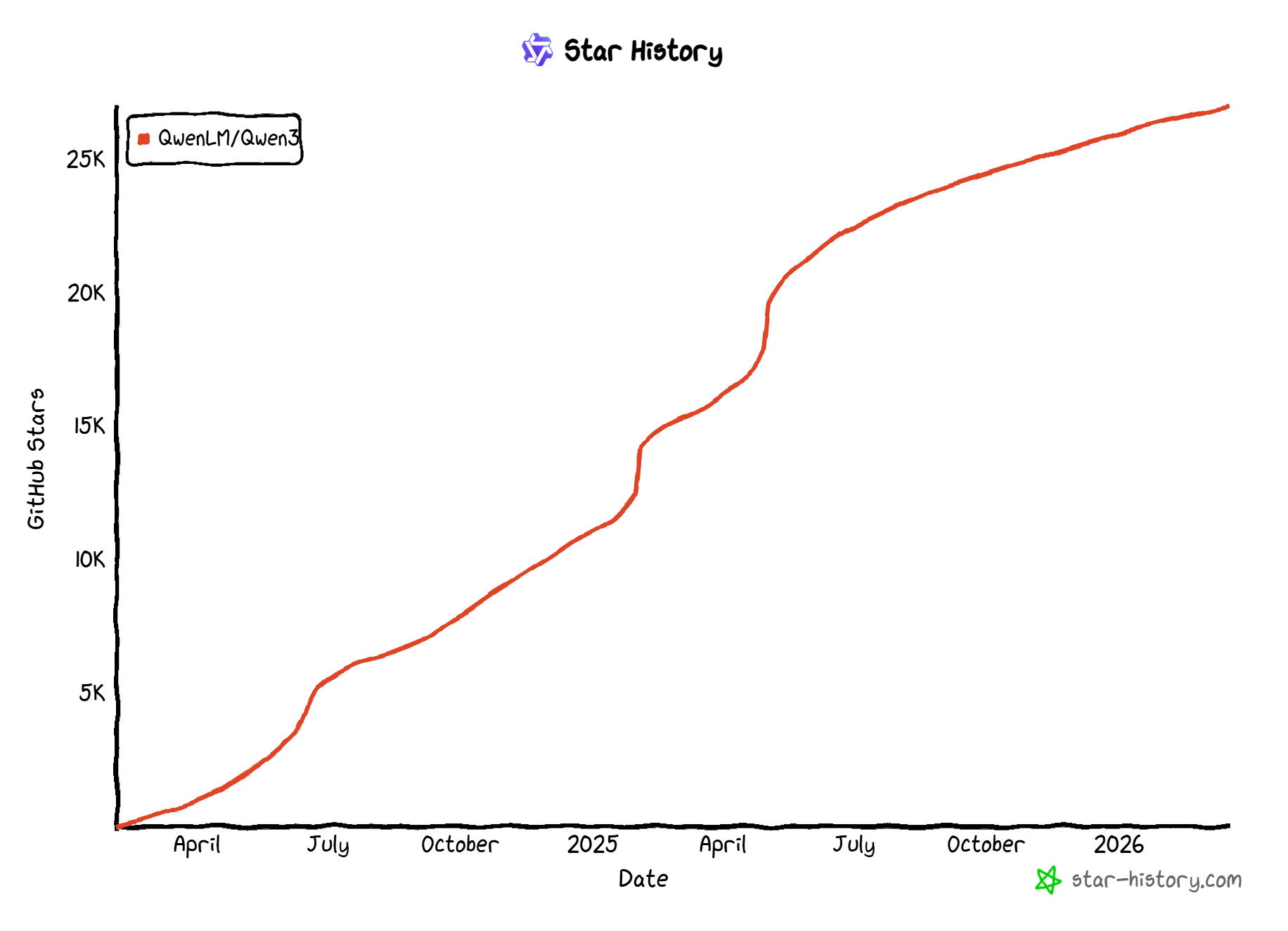
🧰 Qwen3 (GitHub) 26.9k ☆ - Open-weight model family becoming a default base layer for downstream AI
The Scoop: OpenClaw is a self-hosted, model-agnostic AI agent runtime that connects to messaging apps like WhatsApp, Telegram, Slack, Discord, Signal, iMessage, and Teams. Running as a long-lived gateway on your machine, it can execute tools, manage files, run scripts, schedule tasks, and extend itself through skills. In February 2026, creator Peter Steinberger announced he is joining OpenAI while OpenClaw transitions toward foundation governance to remain open and independent.
Why It’s a Big Deal
It captures the real power shift in OSS AI: winning is no longer just about releasing a strong model, but about becoming the family everyone fine-tunes, quantizes, serves, and builds on.
Qwen sits at the center of the report’s biggest macro point - Chinese open models are no longer just competitive, but increasingly defining the direction and adoption curve of the open ecosystem.
Its strength comes from ecosystem gravity, not just benchmark performance: broad tooling support, multiple sizes, permissive licensing, and easy local deployment make it highly reusable.
Under the Hood
One repo, many entry points: instruct and thinking variants, larger MoE-style models, smaller local options, and support for long-context workloads up to 256k tokens, with extension up to 1m in newer releases.
Designed for broad portability across the open inference stack, with first-class guidance for Transformers, vLLM, SGLang, TensorRT-LLM, Ollama, llama.cpp, MLX, OpenVINO, and mobile-oriented runtimes.
Apache 2.0 licensing plus strong quantization and fine-tuning pathways make Qwen3 unusually easy to adapt into downstream products, wrappers, and domain-specific systems.
Qwen3 is not just another popular model repo - it is a strong example of how open models become platforms once the ecosystem decides they are easy to build around.
🔭 ON THE RADAR
Stuff that’s hot and is trending at over 10K stars.
🧪 autoresearch (GitHub) 42.8k ☆ - Autonomous overnight experimentation for single-GPU model training
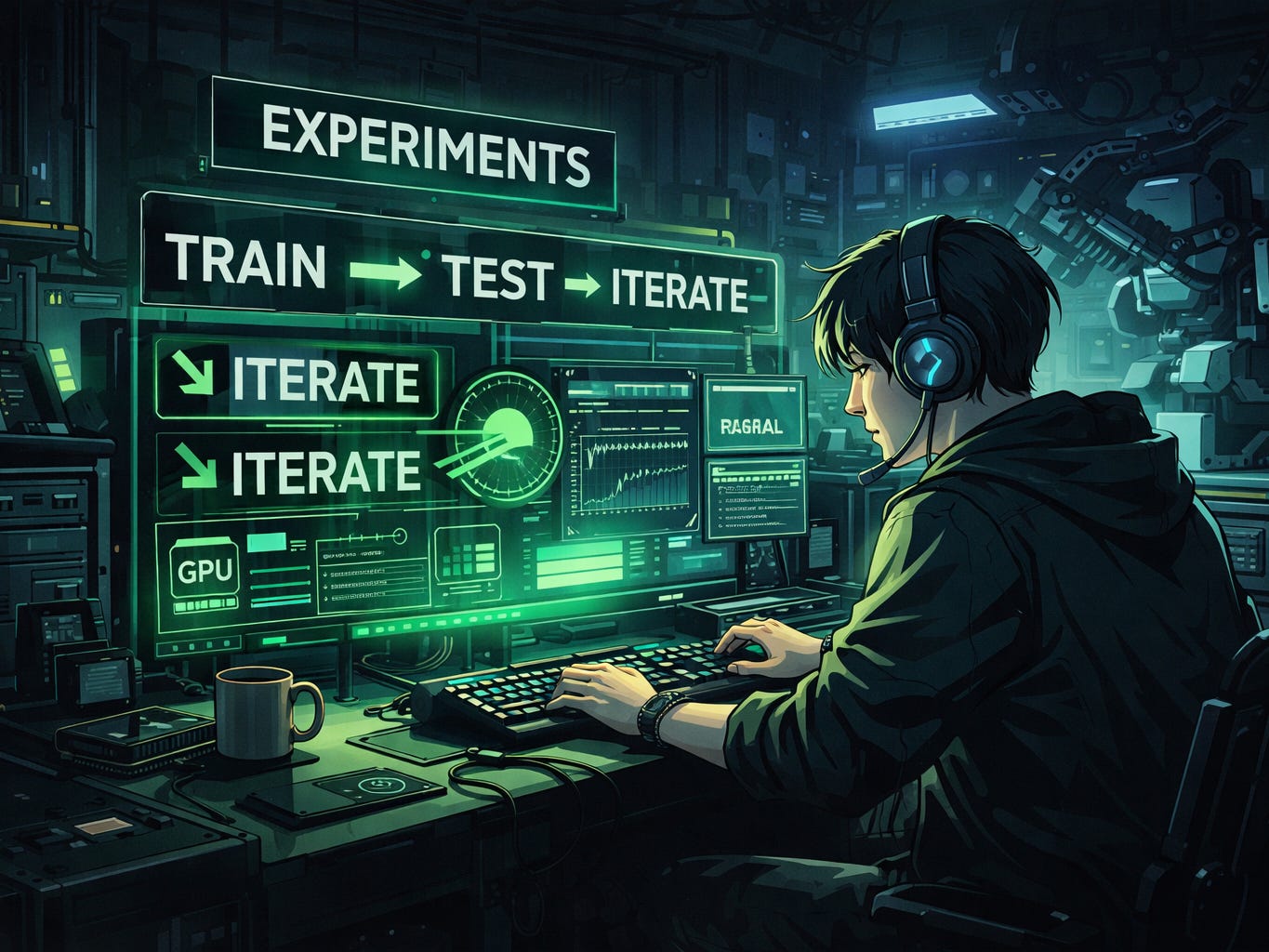
The Scoop: autoresearch is Andrej Karpathy’s minimal framework for letting an AI agent run real LLM training experiments overnight on a single GPU. The setup is intentionally tight: the agent edits one training file, runs a fixed five-minute experiment, checks whether the model improved, and iterates.
Why It’s a Big Deal
It turns model research into an agent-native loop, where the LLM is not just helping with code but actually running bounded empirical experiments end-to-end.
The design is unusually legible: one GPU, one editable file, one metric, and a fixed five-minute wall-clock budget make the whole system easy to reason about.
It points to a broader shift in OSS AI tooling from static copilots toward closed-loop systems that can test, compare, and improve themselves.
Under the Hood
The repo revolves around three files:
prepare.pyfor fixed setup and utilities, train.py as the only mutable file, andprogram.mdas the human-written instruction layer for the agent.Every experiment runs for exactly five minutes and is measured on
val_bpb, a vocab-size-independent validation metric designed to keep comparisons fair across architectural changes.The codebase is deliberately self-contained and minimal, built around a simplified single-GPU nanochat training stack with no distributed setup or large config machinery.
autoresearch feels like a clean early example of what happens when prompting becomes experimental infrastructure.
⌨️ CLI-Anything (GitHub) 19k ☆ - Agent-native CLI generation for existing software

The Scoop: CLI-Anything turns existing software into agent-native CLIs. Instead of relying on brittle UI automation, it generates structured command-line interfaces for real tools like Blender, GIMP, LibreOffice, OBS Studio, and more.
Why It’s a Big Deal
It treats the CLI as the universal control surface for agents, which is a much bigger thesis than adding isolated AI features to individual apps.
The breadth of supported software suggests this can become a repeatable interface layer, not just a set of one-off demos.
Its reliance on real backends rather than toy reimplementations gives it much stronger infrastructure potential.
Under the Hood
The system follows a seven-phase pipeline covering analysis, design, implementation, testing, documentation, and publishing.
Generated CLIs support both REPL usage and subcommand-based scripting, with built-in JSON output for structured agent use.
The repo highlights 1,720 passing tests across 16 software demos and auto-generated
SKILL.mdfiles for agent discovery.
CLI-Anything is a strong example of OSS moving from agent apps toward agent interface infrastructure.
📎 paperclip (GitHub) 29.4k ☆ - Open-source orchestration for zero-human companies

The Scoop: paperclip is an orchestration layer for running teams of AI agents like a company rather than a pile of bots. It provides a dashboard for goals, budgets, org charts, tickets, and governance across multiple agents and runtimes.
Why It’s a Big Deal
It pushes the agent conversation beyond single assistants and into organizational software, with hierarchy, budgeting, and accountability built in.
The repo is interesting because it focuses on the operating layer around agents rather than trying to be yet another agent framework.
Its “zero-human companies” framing is bold, but it usefully forces the product to think like business software instead of a chat tool.
Under the Hood
The product combines a Node.js server and React UI with support for org charts, heartbeats, goal alignment, ticketing, and cost controls.
It is explicitly bring-your-own-agent, supporting tools like OpenClaw, Claude Code, Codex, Cursor, Bash, and HTTP-based systems.
The architecture emphasizes safeguards like atomic task checkout, persistent agent state, revisioned config changes, and budget enforcement.
paperclip shows what agent OSS looks like when it starts taking the shape of operating software rather than developer tooling.
🔬 BELOW THE RADAR
Our hot picks for recent OSS projects to keep a close eye on for the future.
🌍 Crucix (GitHub) 4.8k ☆ - Personal intelligence terminal for live world monitoring

The Scoop: Crucix is a local-first intelligence dashboard that aggregates 27 OSINT sources into one Jarvis-style monitoring stack, spanning markets, conflicts, radiation, flights, satellites, and social feeds, with alerts and optional LLM briefings.
Get started: try the public demo at crucix.live first, then clone the repo, configure .env, and run npm run dev or docker compose up.
🎨 impeccable (GitHub) 10.7k ☆ - Design steering system for AI-generated frontend work

The Scoop: impeccable is a design language layer for AI-assisted frontend generation, built around one skill, 20 steering commands, and explicit anti-patterns to push models away from repetitive AI design tropes.
Get started: visit impeccable.style, download the bundle for your tool, and install it into Cursor, Claude Code, OpenCode, Gemini CLI, Codex CLI, or another supported environment.
🧱 openui (GitHub) 2k ☆ - Open standard and runtime for generative UI

The Scoop: openui is a full-stack framework for generative UI built around OpenUI Lang, a compact streaming-first language for model-generated interfaces that aims to be much more token-efficient than JSON.
Get started: run npx @openuidev/cli@latest create --name genui-chat-app, add your API key to .env, and start the scaffolded app with npm run dev.
Repository Radar is brought to you by Alexander, a Partner at Picus Capital, and Claudius, the co-founder of Index Labs. In this Substack, we focus on software infrastructure and open-source innovation in AI and beyond, tracking major trends while uncovering the hidden gems shaping the future of technology.