
Repository Radar - PR#35
Keeping an eye on the world of OSS software - one scan at a time


Welcome to PR #35 of Repository Radar — your no-fluff scan of open-source software infrastructure. This issue’s theme: when the model layer commoditizes, the value moves to the context layer. JetBrains just open-sourced Mellum2, a small, fast “focal model” built to be a component rather than a champion — and that bet only pays off if something good feeds it the right context. We pick Understand-Anything as the open comprehension substrate, then range across anti-slop design skills, code knowledge graphs, persistent agent runtimes, open voice agents, team-architecture factories, and token compression — the primitives deciding what every model actually sees.
📡 ABOVE THE RADAR (aka the BFD)
In “above the radar” we take a look at some of the big splash software infrastructure announcements and go on the hunt for OSS that are similar.
This week JetBrains open-sourced Mellum2 under Apache 2.0 — a 12B mixture-of-experts model with only 2.5B parameters active per token, trained from scratch on code and natural language. The pitch is not another leaderboard run. JetBrains is explicit that Mellum2 is a focal model: a fast, specialized component for routing, summarization, intermediate reasoning, and quick sub-agents — exactly the high-frequency, latency-sensitive steps you’d be crazy to spend a frontier model on. Their stated thesis is that the future belongs to coordinated systems, not single models, and that practical AI products need focal models sitting next to the big ones.
That confirms the shift Repository Radar has been tracking all year: capability is no longer the scarce resource. Open weights are everywhere, focal models cut inference time in half, and the “one agent, one job” pattern is winning. What’s scarce now is context — getting the right, compressed, well-structured information in front of whatever model you’re running. When the model layer commoditizes, value migrates up to the layer that decides what the model sees, produces, and remembers.
That’s the lens for this issue: nearly every pick lives in the context layer — comprehension, compression, taste, team-generation, memory. It’s the connective tissue that makes a cheap focal model behave like an expensive one.
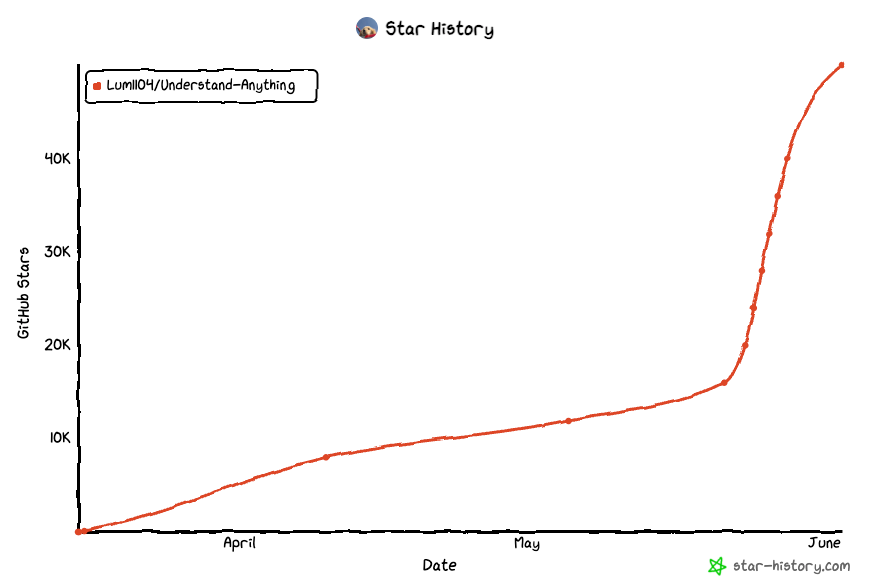
🗺️ Understand-Anything (GitHub) 50k ☆ - The open comprehension substrate for the focal-model era

The Scoop: Understand-Anything is a multi-agent pipeline (and Claude Code plugin) that analyzes any project — or a Karpathy-pattern LLM wiki — and builds a knowledge graph of every file, function, class, and dependency, then renders it as an interactive dashboard you can pan, search, and ask questions about. Plugin-native across Claude Code, Codex, Cursor, Copilot, Gemini CLI, and a dozen more agents. MIT, by Yuxiang Lin.
Why It’s a Big Deal
A fast model is only as good as the context routed to it, and a navigable graph is how you build that context cheaply — Understand-Anything is the comprehension layer that the focal-model thesis depends on.
The graph ships as plain JSON you commit once, so teammates and agents skip the whole indexing pipeline — onboarding, PR review, and docs-as-code come along for free.
It crosses the human/agent boundary on purpose: the same graph that gives a new hire a guided tour gives an agent diff-impact analysis and semantic search.
Under the Hood
Five-to-seven specialized agents (project-scanner, file-analyzer, architecture-analyzer, tour-builder, graph-reviewer, plus domain and wiki analyzers) run in parallel and re-run incrementally on changed files only.
Output is layer-colored, searchable, and persona-adaptive, with a force-directed knowledge-base mode and community clustering for wikis.
TypeScript core, one-line install or
/plugin marketplace add, and a post-commit hook that keeps the graph fresh as you code.
Understand-Anything is what “context engineering” looks like when you hand both the human and the model the exact same map.
🔭 ON THE RADAR
Stuff that’s hot and is trending at over 10K stars.
🎨 taste-skill (GitHub) 31.6k ☆ - Anti-slop design skills that fix what AI-built UIs get wrong

The Scoop: taste-skill is a set of portable Agent Skills (SKILL.md files) that upgrade AI-generated frontends — stronger layout, typography, motion, and spacing instead of the generic boilerplate look. Framework-agnostic, works with Codex, Cursor, and Claude Code, and installs with a single npx skills add. MIT, by Leonxlnx.
Why It’s a Big Deal
As code generation gets commoditized, taste becomes the differentiator — and taste-skill encodes it as a reusable instruction file rather than a one-off prompt.
Three tunable dials (variance, motion, density) plus opinionated variants — minimalist, brutalist, soft, redesign — let you set a visual direction without hand-holding the model.
It bundles image-generation skills for reference boards, so the design language is locked before a line of code gets written.
Under the Hood
Skills are discovered from the repo’s
skills/folder by thenpx skills addCLI; you can also paste a SKILL.md straight into a chat or drop it into a project.The v2 rewrite infers the brief, maps a design system, and runs a strict pre-flight check before generating.
Pure portable skill files — no runtime, no bundler, no lock-in.
taste-skill is a bet that the scarce thing in AI frontends isn’t code — it’s judgment, and judgment now ships as a file.
🕸️ codegraph (GitHub) 37.8 ☆ - Pre-indexed code graph that cuts Claude Code’s tool calls ~90%
The Scoop: codegraph is an MCP server that hands Claude Code’s Explore agents a pre-indexed knowledge graph — symbols, call graphs, structure — so they query the graph instead of grepping the filesystem. 100% local (SQLite + tree-sitter), 19+ languages, zero data leaving your machine. MIT, by Colby McHenry.
Why It’s a Big Deal
The context-efficiency layer made literal: the author’s benchmarks across six real codebases report roughly 92% fewer tool calls and 71% faster exploration.
It pairs cleanly with the focal-model thesis — fewer tokens burned on discovery means a smaller, cheaper model can answer the same architecture question.
A native file watcher auto-syncs the graph as you code, so it stays current with zero configuration.
Under the Hood
tree-sitter parses source into ASTs that land in SQLite with FTS5; a resolution pass links calls to definitions, imports to files, and class inheritance.
It exposes search / callers / callees / impact / context as MCP tools, plus a library API for your own pipelines.
codegraph affectedtraces import dependencies to pick exactly which test files a diff touches — drop it into CI or a pre-commit hook.
Same question, a fraction of the tokens — codegraph is what “understanding” costs when you precompute it.
🪽 hermes-webui (GitHub) 12.4k ☆ - A web and mobile front door for an always-on, remembering agent

The Scoop: hermes-webui is a lightweight web app — Python plus vanilla JS, no build step or framework — for Nous Research’s Hermes Agent, with near 1:1 CLI parity, persistent memory, self-hosted scheduling, and access from 10+ messaging platforms. MIT, by Nathan Esquenazi.
Why It’s a Big Deal
The persistent-runtime layer: most tools reset every session, while Hermes retains a user profile, agent notes, and self-written skills, so it gets more capable the longer it runs.
Provider-agnostic and fully self-hosted — your memory, your hardware — and it can spawn Claude Code or Codex for heavy coding and fold the results back into its own memory.
It’s reachable from your phone over Tailscale or an SSH tunnel, turning a server-side agent into a genuine daily driver.
Under the Hood
Three-panel UI (sessions / chat / workspace) with SSE streaming, inline tool-call cards, and a context-usage ring; runs the agent in-process or in separate containers.
Self-hosted cron jobs fire while you’re offline and deliver results to Telegram, Discord, Slack, Signal, email, and more.
137 contributors with code in a release tag and 430+ releases — a community project shipping at sprint cadence.
hermes-webui is the memory-and-presence layer: the part of the stack that remembers who you are after the model forgets.
🔬 BELOW THE RADAR
Our hot picks for recent OSS projects to keep a close eye on for the future.
🎙️ dograh (GitHub) 4.1 ☆ - Open-source voice-agent platform, the Vapi alternative

The Scoop: dograh is a drag-and-drop builder that takes you from zero to a working voice bot in under two minutes — self-hostable with no vendor lock-in, bring-your-own LLM/TTS/STT, built-in AI testing personas (LoopTalk), and telephony via Twilio, Vonage, and friends. Built on pipecat, maintained by a YC-alumni team, BSD-2-Clause.
Get started: curl -o docker-compose.yaml https://raw.githubusercontent.com/dograh-hq/dograh/main/docker-compose.yaml && docker compose up
🏭 harness (GitHub) 5.5k ☆ - A factory that builds whole agent teams from one sentence
The Scoop: harness is a Claude Code meta-skill — say “build a harness for this project” and it turns a domain description into an agent team plus the skills they use, picked from six team patterns (pipeline, fan-out/fan-in, expert pool, producer-reviewer, supervisor, hierarchical delegation). Apache 2.0, by Minho Hwang; an author-measured A/B run reports +60% output quality (n=15, third-party replications pending).
Get started: /plugin marketplace add revfactory/harness then /plugin install harness@harness
🗜️ headroom (GitHub) 5.7k ☆ - Context compression before tokens ever reach the model

The Scoop: headroom compresses everything an agent reads — tool outputs, logs, RAG chunks, files, and history — for 60-95% fewer tokens with the same answers, as a library, a drop-in proxy, or an MCP server. Local-first and reversible (originals stay retrievable on demand), with cross-agent memory and a headroom learn mode that mines failed sessions into CLAUDE.md fixes. Apache 2.0, by Tejas Chopra; integrates with LiteLLM (our PR #34 pick), LangChain, the Vercel AI SDK, and more.
Get started: pip install "headroom-ai[all]" then headroom wrap claude
Repository Radar is brought to you by Alexander, a Tech Investor at Keen, and Claudius, the co-founder of Index Labs. In this Substack, we focus on software infrastructure and open-source innovation in AI and beyond, tracking major trends while uncovering the hidden gems shaping the future of technology.