

Repository Radar - PR#40
Keeping an eye on the world of OSS software - one scan at a time


Welcome to PR #40 of Repository Radar - your no-fluff scan of open-source software infrastructure. In this issue, a neocloud buys its way into owning both compute and orchestration for a popular ML framework, and we go looking for the vendor-neutral alternative that’s been quietly building for over a decade. Above the Radar: Dask. On the Radar: an Alibaba-scale code review CLI, a team-level memory hub out of Tencent, and a self-improving coding agent from Prime Intellect. Below the Radar: a distributed agent sandbox platform, an internal AI OS Cloudflare just open-sourced, and an independent auditor for AI agents.
📡 ABOVE THE RADAR (aka the BFD)
In “above the radar” we take a look at some of the big splash software infrastructure announcements and go on the hunt for OSS that are similar.
On July 30, AI infrastructure company Nscale agreed to acquire Anyscale for roughly $1.65 billion. Anyscale is the company behind Ray, the widely used open-source distributed computing framework much of the ML world already runs on. The deal folds Ray’s commercial layer directly into a neocloud’s compute stack.
That’s vertical consolidation, not just a funding round. Nscale sells GPU capacity; Anyscale sells the orchestration deciding how it gets used. One roof means the company renting you hardware now owns the scheduling layer too. The constraint shifts from “can I get compute” to “whose orchestration am I locked into.”
That is the lens for this issue: when a compute-and-orchestration stack gets vertically owned, the projects worth watching are the ones that stay deliberately out of anyone’s stack.
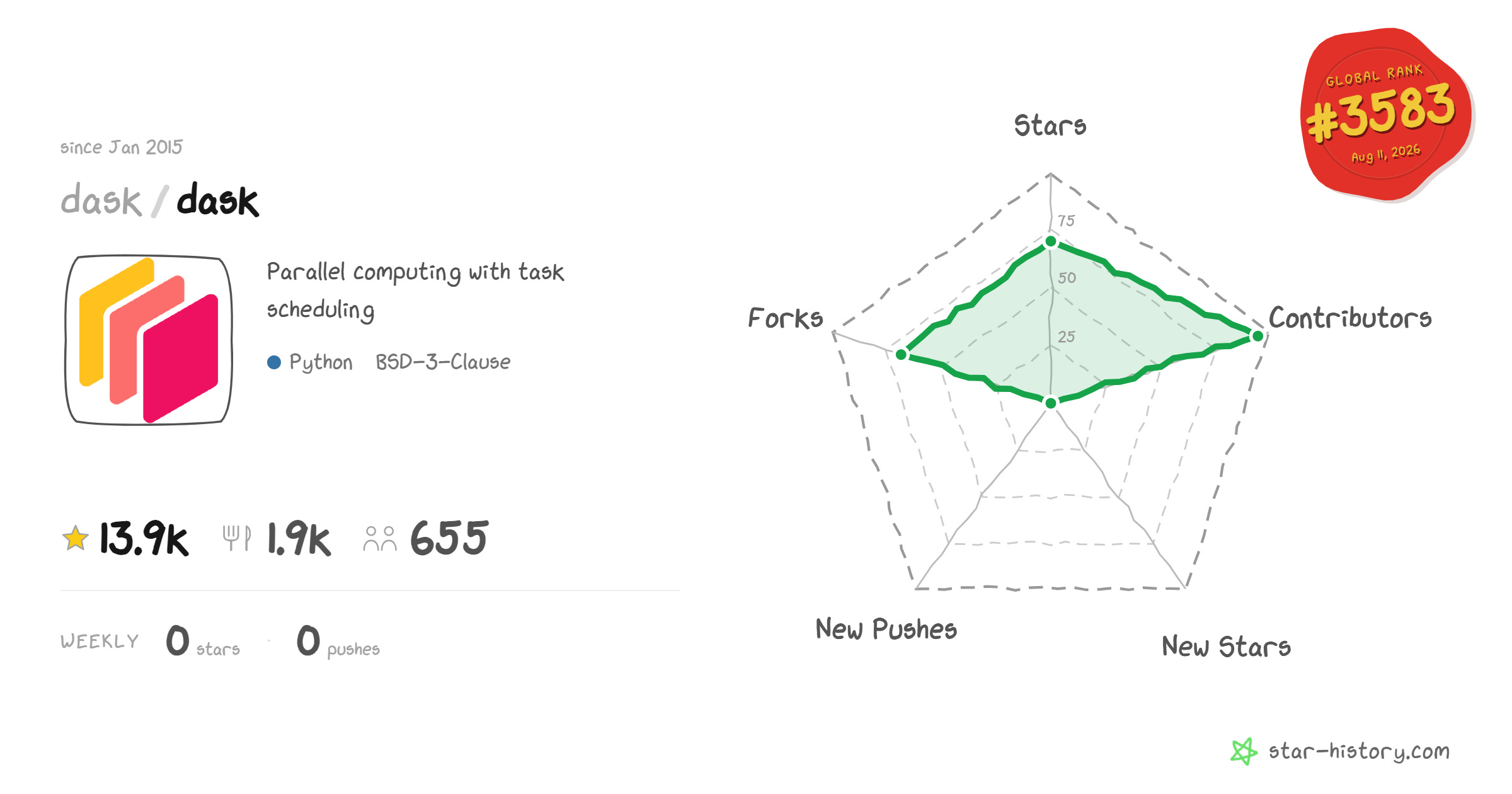
📡 Dask (GitHub) 13.9k ☆ - distributed compute for Python that answers to NumFOCUS, not a neocloud
The Scoop: Dask is a flexible parallel computing library for Python, scaling pandas, NumPy, and scikit-learn-style workflows across a cluster, or just your laptop’s cores, using nearly the same code.
Why It’s a Big Deal
Genuinely neutral governance: fiscally sponsored by NumFOCUS, not owned by a single backer, so no acquisition quietly changes who controls the roadmap.
Predates Ray by years as Python’s original answer to “run this bigger than one machine,” still the default reach across the PyData world.
The counter-example to a neocloud buying an orchestration layer: infrastructure built to be nobody’s exclusive asset from day one.
Under the Hood
Task graph execution: code compiles to a DAG, then a scheduler runs it, so scripts scale from laptop to thousand-node cluster unchanged.
Distributed scheduler with a real-time diagnostic dashboard, making cluster bottlenecks visible rather than a black box.
Native integration with pandas, NumPy, scikit-learn, and XArray, rather than a parallel Dask-only ecosystem.
Dask is not just a Ray alternative, it is proof vendor-neutral is a governance decision, not a marketing line.
🔭 ON THE RADAR
Stuff that’s hot and is trending at over 10K stars.
🔍 Open Code Review (GitHub) 20.0k ☆ - Alibaba’s internal reviewer, now open source
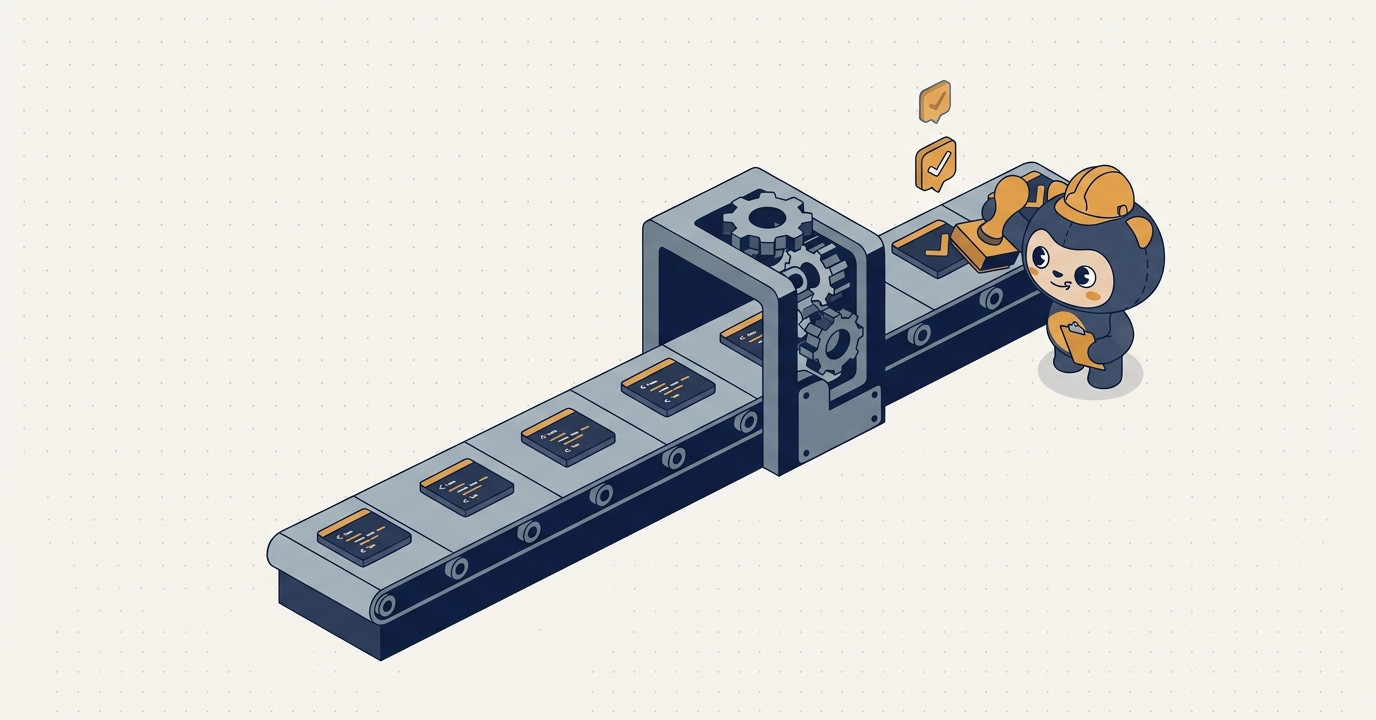
The Scoop: Open Code Review is an AI code review CLI, Alibaba’s internal review assistant for two years before being open-sourced.
Why It’s a Big Deal
Beats general-purpose agents on precision and F1 across 200 real PRs, at roughly a ninth of the token cost.
Delegation mode runs the review with your own agent’s model, no separate API key needed.
Validated at Alibaba’s internal scale against millions of real defects before being open-sourced.
Under the Hood
Hybrid architecture: deterministic engineering (file selection, bundling, rule matching) handles what must not go wrong, an LLM agent handles the rest.
ocr scanreviews whole files or directories with no diff needed, useful for auditing unfamiliar codebases.Built-in ruleset covering NPE, thread-safety, XSS, and SQL injection, compatible with OpenAI and Anthropic models.
Open Code Review is not just a linter with an LLM bolted on, it is proof review quality comes from engineering constraints, not just a bigger model.
🧠 TencentDB Agent Memory (GitHub) 19.6k ☆ - memory that belongs to the team
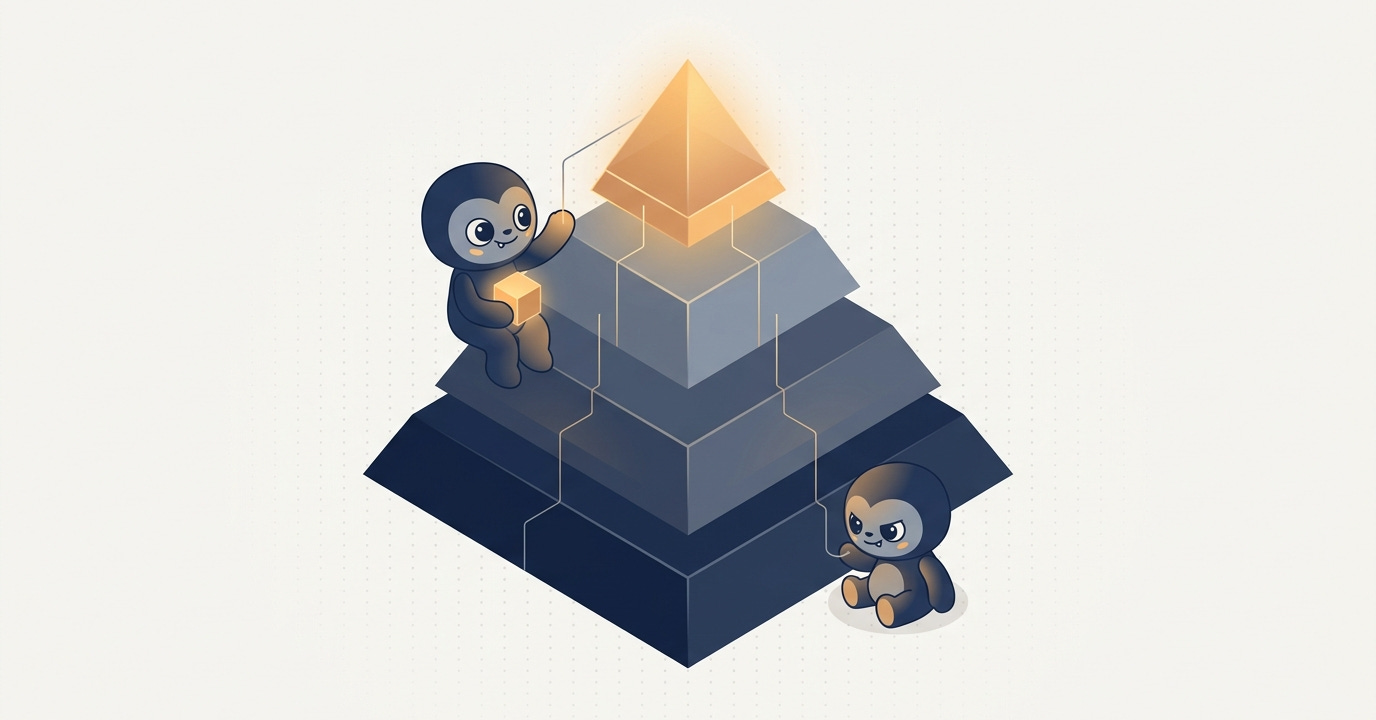
The Scoop: TencentDB Agent Memory is a team-level memory hub, turning conversations, docs, and code into four governed asset types shared across a team’s agents rather than trapped in one person’s history.
Why It’s a Big Deal
Most memory tools solve the personal case. This targets the real gap: five developers whose agents each relearn the same lesson is four wasted lessons.
Real benchmarks: up to 61% lower token usage and a 51% relative pass-rate gain on OpenClaw across WideSearch, SWE-bench, and AA-LCR.
ACL-based sharing by team, user, and agent means memory gets governed, not just accumulated.
Under the Hood
Four asset types, Chat Memory, Skill, Wiki, Code-Graph, bound to agents through Fixed Binding plus ACL.
Symbolic short-term memory condenses verbose tool logs into a compact Mermaid graph with node-level tracing back to raw evidence.
Layered long-term memory runs Conversation to Atom to Scenario to Persona, a semantic pyramid instead of a flat vector dump.
TencentDB Agent Memory is not just a bigger context window, it is plumbing for memory as a durable, governed team asset rather than one agent’s session exhaust.
🔁 Prime Agent (GitHub) 13.4k ☆ - the agent that rewrites its own instructions
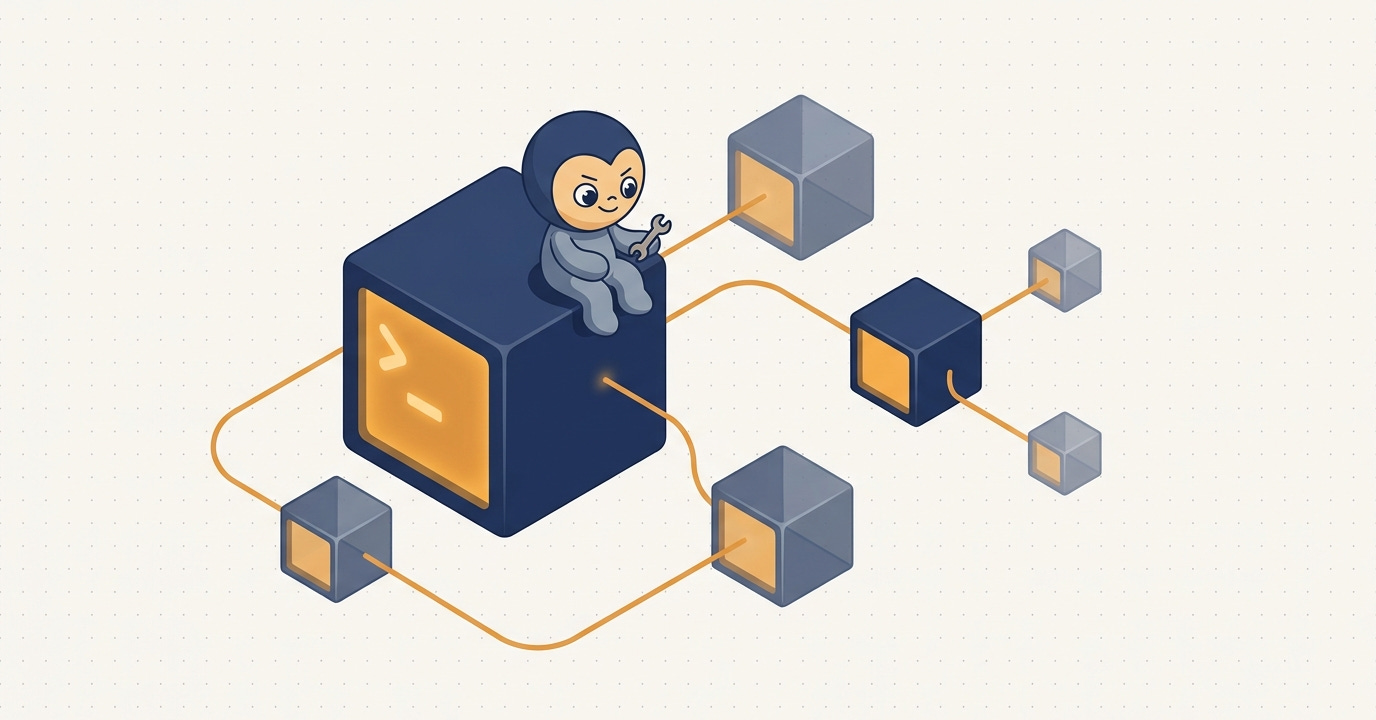
The Scoop: Prime Agent is a self-improving coding agent built around the Recursive Language Model, context as a variable, sub-agents as function calls inside a persistent REPL, plus a Continual Harness it refines as it works.
Why It’s a Big Deal
/refineapplies small, evidence-backed updates to its own harness state, never touching the immutable base prompt, a genuinely different answer to “how does an agent improve” than fine-tuning.Reports 95.5% on ARC-AGI-3 with Opus 5, against a 95.4% human expert baseline, on a model that scores far lower in other harnesses.
Daemon-backed sessions and direct agent-to-agent messaging point toward agents as long-running processes, not single chat sessions.
Under the Hood
A persistent IPython REPL is the single model-facing tool, files, shell, and subagents all happen through code.
Bounded autonomous mode runs within configured turn, token, and time budgets, with user-defined quality gates.
Built on Mario Zechner’s
piharness rather than a ground-up TUI, freeing effort for the RLM and Continual Harness layers.
Prime Agent is not just another terminal coding agent, it is a bet that the harness, not the model, is where the next real gains hide.
🔬 BELOW THE RADAR
Our hot picks for recent OSS projects to keep a close eye on for the future.
📦 AgentENV (GitHub) 3.1k ☆ - the sandbox platform powering Kimi K3's RL training

The Scoop: AgentENV is a distributed platform for running agent environments at scale, built to power agentic RL training for Kimi K3, scaling Firecracker microVMs with snapshot-backed boot times under 50ms.
Get started:
curl -fsSL https://raw.githubusercontent.com/kvcache-ai/AgentENV/main/scripts/install.sh | sudo bash
sudo systemctl start aenv
☁️ Cloudflare OS (GitHub) 7.6k ☆ - the internal AI operating system Cloudflare just gave away

The Scoop: Cloudflare OS is the “operating system” for AI productivity that Cloudflare built and runs internally across engineering, sales, and everything in between, now open source so any company can fork it into their own.
Get started:
pnpm run-local
🩺 iFixAi (GitHub) 8.3k ☆ - an independent auditor for your AI agents

The Scoop: iFixAi audits AI agents independently of the model or harness that built them, running dozens of inspections across five pillars and handing back an A-to-F scorecard on whether the agent is actually doing what it’s supposed to.
Get started:
ifixai run
Repository Radar is brought to you by Alexander, a Tech Investor at Keen, and Claudius, the co-founder of Index Labs. In this Substack, we focus on software infrastructure and open-source innovation in AI and beyond, tracking major trends while uncovering the hidden gems shaping the future of technology.