
Repository Radar - PR#6
Keeping an eye on the world of OSS software - one scan at a time


Welcome back to PR#6 of Repository Radar, your go-to pulse check on the latest in software infrastructure and open-source innovation. This week, we’re diving deep into the rise of agent protocols, self-hosted AI platforms, and developer tools that don’t just integrate with LLMs - they coordinate them. From Google’s bold A2A release to emerging frameworks for building your own digital twin, the agentic future is arriving fast. Let’s get into it. 🚀
📡 ABOVE THE RADAR (aka the BFD)
In “above the radar” we take a look at some of the big splash software infrastructure announcements and go on the hunt for OSS that are similar.
This time, we're switching it up. While we usually zoom in on big funding rounds or M&A deals and highlight OSS equivalents, this week the biggest story is open source. Google dropped a bombshell at Cloud Next '25 with the release of the Agent2Agent (A2A) Protocol, an open standard for letting AI agents talk to each other across frameworks, platforms, and providers.
In a space crowded with siloed agent ecosystems, A2A is aiming to do for agent communication what HTTP did for the web. And yes - this protocol is not just theory. It’s live. It’s open. And it already works with major frameworks like CrewAI and LangGraph.
What’s more: A2A builds on the same momentum that’s been fueling Anthropic’s Model Context Protocol (MCP) - which continues to be one of the hottest trends in open-source infra. We’re now seeing a wave of new OSS projects blowing up on GitHub just for implementing MCP-compliant servers and interfaces. The shift toward standardized agent protocols is no longer speculative - it's becoming the new layer of the LLM stack.
🛰️ A2A (GitHub) 10.1k ☆ - An Open Protocol for Cross-Agent Interoperability
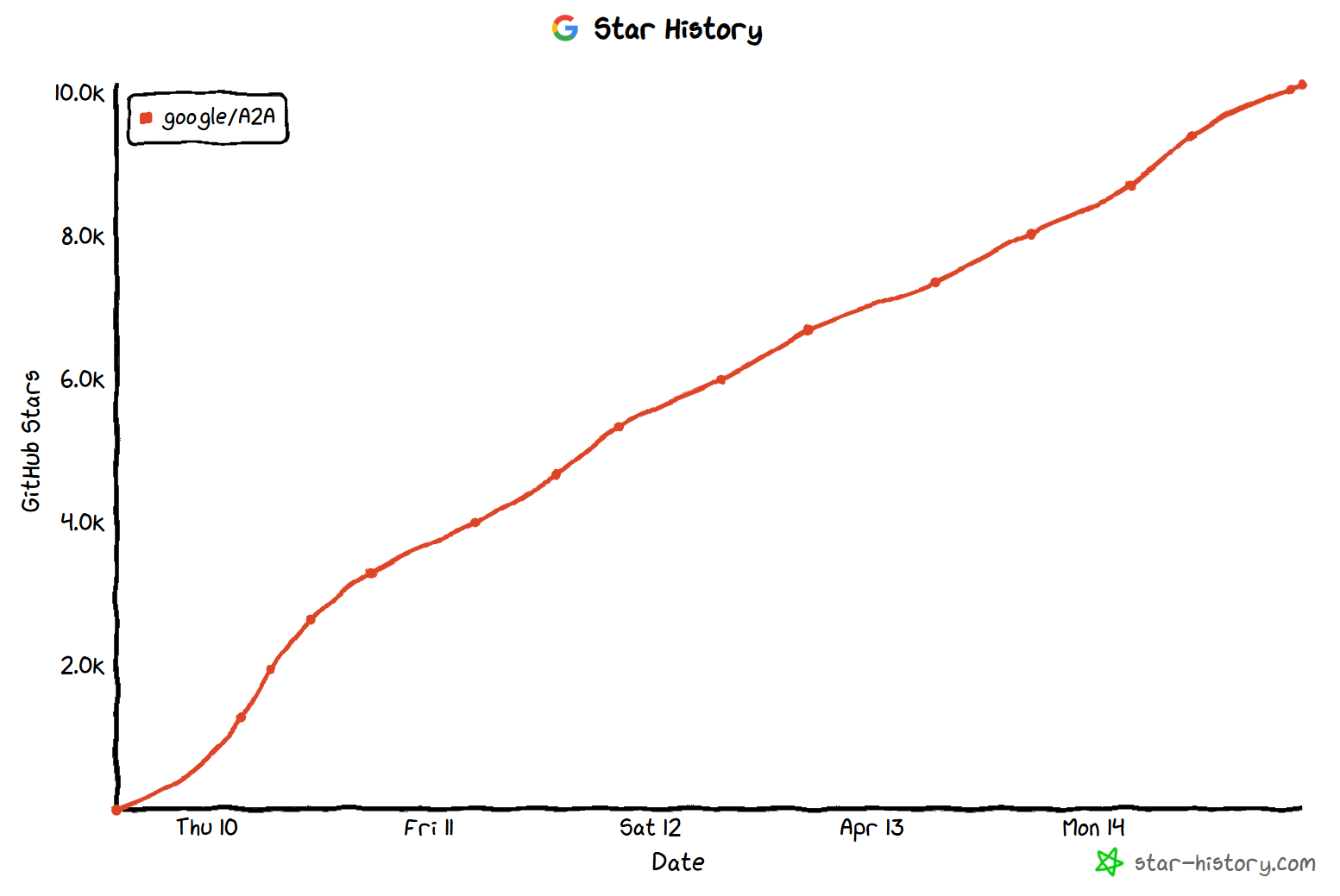
The Scoop: Announced during Google Cloud Next ’25, the Agent2Agent (A2A) protocol is designed to solve a growing pain in enterprise AI: getting multiple agents, often from different vendors or frameworks, to talk to each other in a consistent, scalable way. A2A is Google's response to Anthropic’s Model Context Protocol (MCP), but rather than competing, it complements MCP by adding a layer focused on inter-agent communication. Agents can now discover each other, advertise their capabilities, and securely negotiate how to work together - whether through forms, streaming audio, or JSON APIs.
Why It's a Big Deal
Cross-platform agent interoperability: No more agent silos. A2A standardizes how agents describe themselves and interact across platforms and cloud environments.
Enterprise-ready architecture: Includes discovery, push notifications, streaming updates, and robust task lifecycle management.
Open by default: Designed from the start as a community-driven protocol, with support for multiple languages (Python, JS) and frameworks (LangGraph, CrewAI, Genkit).
Backed by Google, open to all: While the protocol is being developed by Google, contributions are open and encouraged via GitHub.
Under the Hood
AgentCard: Agents self-describe via a .well-known/agent.json file, listing capabilities, endpoints, and auth schemes.
Task lifecycle: Agents communicate using standard task events and messages, with support for real-time streaming and webhooks.
Flexible communication: Works across text, structured data (forms), file exchange, and even audio/video interactions.
Sample agents and dev kits available: Includes working clients and servers in Python and JS, plus Agent Developer Kits (ADKs).
A2A is still young, but with major frameworks already onboard and Google committed to evolving the spec, this might be the first serious step toward true collaborative AI agents across the OSS ecosystem.
🔭 ON THE RADAR
Stuff that’s hot and is trending at over 10K stars.
🖥️ Open WebUI (GitHub) 89.4k ☆ - Self-hosted chat interface for local LLMs, built for multimodal and multi-agent interactions
The Scoop: Open WebUI is a self-hosted, extensible AI platform built for real-world usage - think ChatGPT with superpowers, but running locally on your machine. It integrates with Ollama, OpenAI-compatible APIs, and supports local RAG workflows, Python tool calling, and multi-agent chat experiences - all within a sleek, PWA-ready interface.
Why It's a Big Deal
Agent Interop by Design: Open WebUI positions itself as a hub for pluggable agents and model backends - making it a practical front-end candidate for protocols like MCP and Google’s A2A.
Offline-First + Open-Source: Fully self-hostable with Docker, Helm, or pip - perfect for air-gapped environments and enterprise control.
LLM Multitasking: Run multiple models (Ollama, Claude, GroqCloud, etc.) side-by-side and switch dynamically per thread.
Integrated RAG + Web Browsing: Native document and web content retrieval baked right into the chat interface.
Voice/Video UI + Markdown/LaTeX Support: Bridges multimodal I/O with clean, developer-focused formatting.
Under the Hood
Written in Python with a plugin-based architecture for extensibility.
Supports Ollama, OpenAI-compatible APIs, Langfuse, LibreTranslate, and more.
Deployable via Docker, Kubernetes, or pip; GPU-ready with CUDA containers.
RBAC, custom pipelines, multilingual UI, and real-time voice/video call integration.
Open WebUI is exactly the kind of modular LLM client that could serve as a front-end or orchestration layer for A2A agents - handling UI, session control, and model I/O while letting backend agents handle task-specific skills. It’s part of the broader movement toward interoperable, composable agent stacks built on open protocols.
📊 ChartDB (GitHub) 15.8 ☆ - Database diagram editor for visualizing and designing schemas from a single query
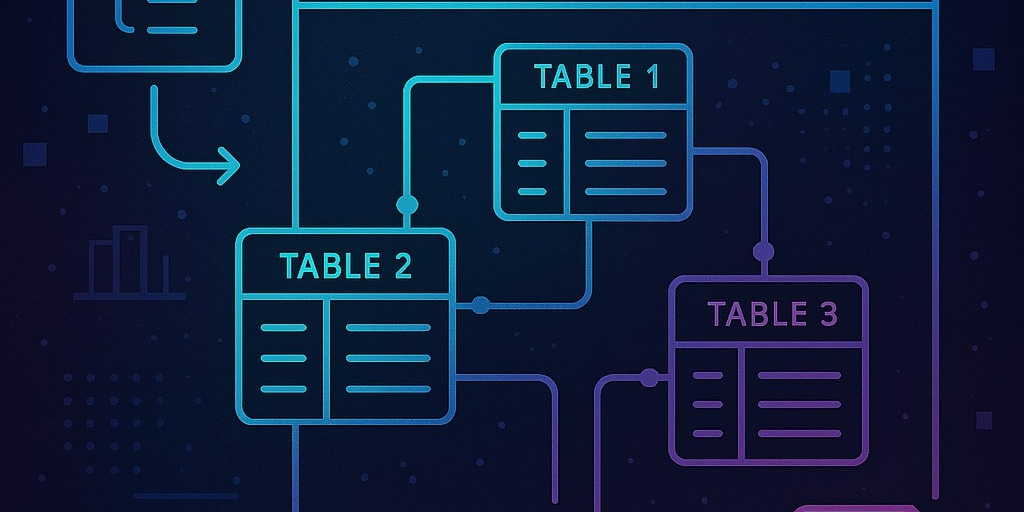
The Scoop: ChartDB is a slick, web-based database diagram editor that lets you visualize your schema with a single Smart Query - then edit, export, and collaborate, all without an account. It’s currently in public beta and already making waves with instant setup, cross-DB support, and AI-powered DDL generation.
Why It's a Big Deal
One-query schema viz: Instantly generate diagrams from a “magic query” - no manual modeling required.
AI-powered DDL export: Migrate between SQL dialects like Postgres, MySQL, and ClickHouse using LLM-assisted codegen.
Fully local or self-hosted: Run via Docker or npm, with optional support for OpenAI or custom inference servers.
Interactive UX: Built-in editor lets you tweak schemas live and collaborate visually.
Under the Hood
Uses Vite + JS for the front-end; supports OpenAI or any custom inference endpoint.
Supports PostgreSQL, MySQL, SQL Server, MariaDB, SQLite, CockroachDB, ClickHouse, and more.
Docker-ready with baked-in AI hooks - including support for vLLM and Qwen models.
ChartDB's modular design and JSON-based schema exchange format make it a natural candidate for integration into multi-agent workflows - especially those involving automated code gen, database setup, or DevOps orchestration under MCP or A2A-compatible toolchains.
🧬 Second-Me (GitHub) 10.6k ☆ - Train your AI self, amplify you, bridge the world
The Scoop: Second-Me is an open-source platform for building your own AI “self” - a persistent, privacy-first identity agent that learns from your data, reflects your personality, and runs locally with full control. It’s not just an LLM wrapper; it’s a bold prototype for decentralized, user-aligned AI.
Why It's a Big Deal
Your AI, your memory: Uses Hierarchical Memory Modeling (HMM) and alignment algorithms to build agents grounded in your personal context.
Networked intelligence: Agents can optionally join a P2P mesh for cross-agent collaboration, introducing an early form of decentralized A2A-style interaction.
Roleplay + Scenario Support: Your AI self can switch personas for tasks like travel planning, customer support, or speed dating simulations.
100% local control: Self-hostable via Docker or native setup, with support for Apple Silicon and local inference engines like llama.cpp and vLLM.
Under the Hood
Built in Python and Node.js; CLI-based orchestration with
make.Uses Qwen2.5 models, with support for Ollama, llama.cpp, and custom endpoints.
Offers integrated setup for Mac/Linux and Docker-based deployment for portability.
Leverages GraphRAG from Microsoft and natural language summarization for memory.
Second-Me aligns closely with the MCP and A2A philosophy, envisioning a future where autonomous agents represent individuals in digital ecosystems. With support for identity persistence, structured memory, and cross-agent collaboration, it's a step toward a decentralized, protocol-driven agent web.
🔬 BELOW THE RADAR
Our hot picks for recent OSS projects to keep a close eye on for the future.
🧰 Task Master (GitHub) 3.5k ☆ - AI task manager that plugs into Cursor, Lovable, Windsurf, Roo, and more
The Scoop: Task Master is a Claude-native, AI-driven task management system that integrates seamlessly with editors like Cursor, Lovable, and Windsurf. It leverages the Model Context Protocol (MCP) to run directly inside your dev environment, letting you parse specs, generate subtasks, and manage workflows via natural language prompts.
Get started:
Install globally and initialize via MCP:
npm i -g task-master-ai🎭 AgentHeros (GitHub) 3.4k ☆ - Generate, animate and schedule your AI characters

The Scoop: AgentHeros is an AI-powered content engine that lets you generate images, create animated videos, and schedule posts - all through agentic workflows. It turns prompts into scroll-stopping assets, then deploys them across social platforms with minimal input.
Get started: Clone the repo to launch locally or explore integrations:
git clone https://github.com/agentheros/agentheros.git
cd agentheros
npm install
npm run dev
🖌️ OmniSVG (GitHub) 1.2k ☆ - A multimodal generator that uses VLMs to create detailed SVGs, from simple icons to complex anime characters
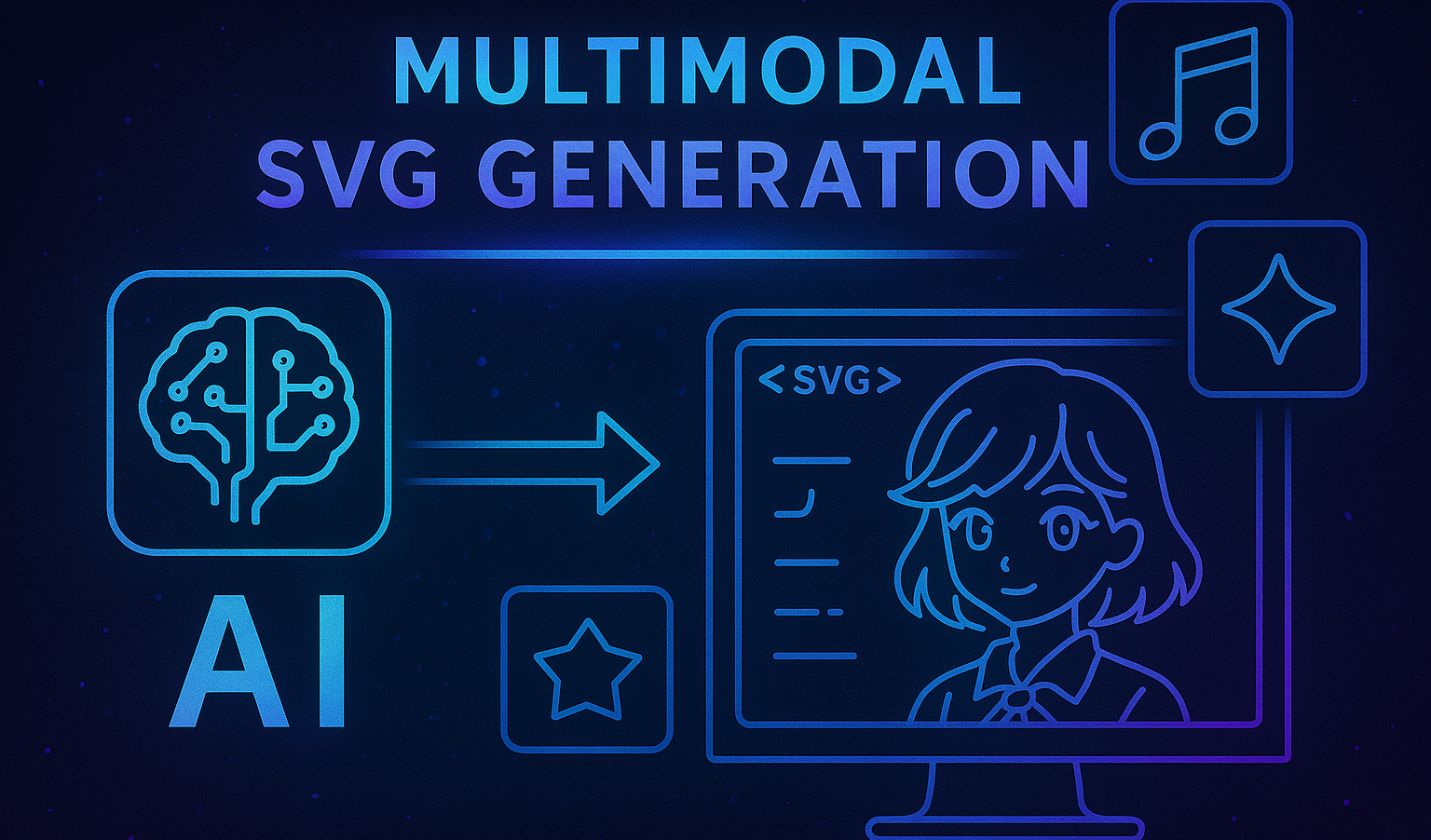
The Scoop: OmniSVG is a multimodal, end-to-end SVG generation model powered by Vision-Language Models (VLMs), capable of producing everything from minimal icons to intricate anime-style characters. It's a unified framework for text-to-vector graphics at high fidelity.
Get started: Explore the paper, released datasets, and upcoming pretrained models via the GitHub repo.
Repository Radar is brought to you by Alexander, a Partner at Picus Capital, and Claudius, an Investor there. In this Substack, we focus on software infrastructure and open-source innovation in AI and beyond, tracking major trends while uncovering the hidden gems shaping the future of technology.