
Repository Radar - #PR8
Keeping an eye on the world of OSS software - one scan at a time


Welcome to PR#8 of Repository Radar - your no-fluff scan of open-source software infrastructure. This week, we spotlight tools redefining AI agent stacks, execution layers, and open-source infra battles. From Redis’ licensing reversal to new agent orchestration tools and sandboxed code runners, OSS is building the backbone for enterprise AI. Let’s dive in. 🚀
📡 ABOVE THE RADAR (aka the BFD)
In “above the radar” we take a look at some of the big splash software infrastructure announcements and go on the hunt for OSS that are similar.
This week, we’re back to classic territory: an open-source showdown with billion-dollar implications.
After a controversial licensing saga, Redis is open source again. With Redis 8, the iconic in-memory data store returns under the AGPLv3 license, undoing last year’s shift to proprietary (RSALv2 / SSPLv1) licenses. The move comes after forks like Valkey gained traction, backed by heavyweights like AWS, Google, and Oracle.
The subtext? Redis’ original license change was meant to deter hyperscalers from reselling “free” Redis services. While it worked (Microsoft inked a license deal), it also fractured the community and fueled alternatives like Valkey, Dragonfly, and KeyDB.
Crucially, this reversal comes at a time when Redis plays an increasingly strategic role in AI infrastructure. No longer just a cache, Redis has become a critical backend for Retrieval-Augmented Generation (RAG), vector search, and real-time inference pipelines. With Redis 8 integrating Vector Sets, JSON, and Time Series features into the core OSS distribution, the move back to open source is as much about reclaiming developer mindshare in AI workloads as it is about community goodwill.
Now, with Redis 8, the company is betting that embracing open source again will restore community trust without compromising control. But is it too late? The battle lines are drawn. Redis has the brand. Valkey has momentum. The OSS community gets to decide what happens next.
🪢 Valkey (GitHub) 21.2k ☆ – A flexible distributed key-value database that is optimized for caching and other realtime workloads

The Scoop: Valkey emerged as a direct response to Redis' license pivot in 2023. Backed by the Linux Foundation and key cloud players, Valkey aims to maintain a fully OSI-compliant Redis alternative, free from the licensing constraints of AGPL or SSPL. It’s binary-compatible with Redis but positions itself as a “community-first” alternative, focusing on transparency, extensibility, and cloud-native support.
Why It's a Big Deal:
Forked with Purpose: Valkey was born out of necessity to preserve a truly open Redis. Its BSD license appeals to enterprises wary of AGPL's SaaS clauses.
Cloud-Backed but Community-Driven: While AWS, Google, and Oracle are key supporters, governance is under the Linux Foundation, aiming to avoid vendor lock-in perceptions.
Feature Parity & Divergence: Initially identical to Redis, Valkey’s roadmap includes differentiated features like improved RDMA support, modular TLS, and extended plugin ecosystems.
Under the Hood:
Key/Value Store at Its Core: Supports classic Redis data structures and commands.
Cross-Platform Build System: Compiles on Linux, macOS, *BSD with both Makefile and CMake support.
Enhanced Extensibility: Modular architecture for adding new data structures and access patterns.
Cloud & Enterprise Ready: Built-in TLS, experimental RDMA, systemd integration, and production-grade utilities.
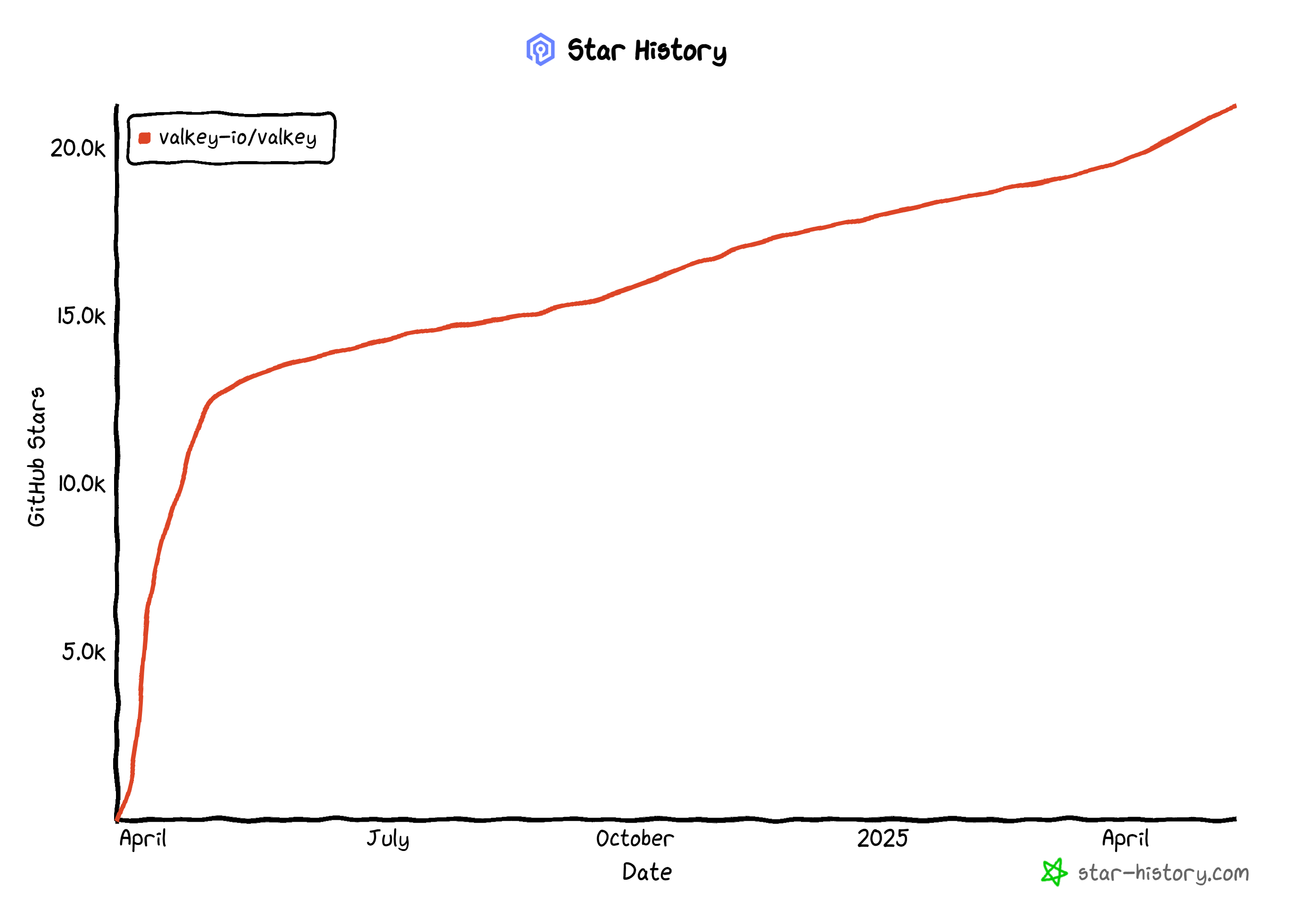
Valkey’s long-term success hinges on whether it can grow beyond being “the fork of Redis” into a differentiated OSS infra pillar. For now, it’s the go-to BSD alternative for companies cautious of AGPL adoption.
🔭 ON THE RADAR
Stuff that’s hot and is trending at over 10K stars.
🧰 Daytona (GitHub) 20.3k ☆ – Secure & Elastic Infra for Running AI-Generated Code

The Scoop: Daytona offers a self-hosted, elastic infrastructure layer for executing AI-generated code in isolated, disposable environments. Think of it as a sandbox orchestration platform for AI agents, enabling safe code execution, app previews, and even live LLM-assisted development - all with sub-100ms cold start times. With SDKs in Python and TypeScript, Daytona lets you spin up sandboxes programmatically, run untrusted code securely, and integrate AI-assisted coding workflows (e.g., Claude codegen to sandbox execution). Whether for AI agents, automated RAG pipelines, or secure developer environments, Daytona bridges the gap between AI outputs and real-world code execution.
Why It's a Big Deal
Secure, Isolated Code Execution: Runs AI-generated code safely in ephemeral sandboxes, essential for agent workflows.
Blazing Fast Elasticity: Sub-100ms sandbox creation enables real-time codegen, previews, and tool use.
AI-Native Integrations: Supports Claude, OpenAI, Ollama & more for seamless prompt-to-execution pipelines.
Under the Hood
Python & TypeScript SDKs: Full programmatic sandbox control for developers.
Docker/OCI Ready: Use any container image to customize sandbox environments.
Built for Scale: Designed for safe, concurrent execution and massive parallelization (coming soon).
Daytona is quietly becoming the infrastructure glue between LLM outputs and production-grade code execution. For anyone building AI agents that generate, test, or deploy code autonomously, Daytona offers a pragmatic, OSS-friendly alternative to rolling your own infra.
🔀 Jujutsu (GitHub) 14.4k ☆ – A Git-Compatible, Conflict-First Version Control System Built for Modern Workflows

The Scoop: Jujutsu (jj) is an open-source version control system designed to rethink how developers manage code changes - with a conflict-first model, automatic rebasing, and operation-level undo. Inspired by Git, Mercurial, Sapling, and Darcs, Jujutsu abstracts away the storage layer (currently using Git repos) and focuses on delivering a more ergonomic, reliable, and resilient developer experience. While Jujutsu feels familiar to Git users, it introduces powerful concepts like working-copy-as-a-commit, operation logs with undo, and conflict tracking as first-class citizens. The result? A VCS that simplifies everyday workflows, while unlocking new collaboration patterns for both solo devs and large teams.
Why It's a Big Deal
Conflict-First Design: Tracks conflicts as structured objects, enabling smarter rebases and auto-resolutions.
Operation Log with Undo: Every action is recorded and reversible, simplifying error recovery.
Working-Copy-as-Commit: No index or stash — every file change is instantly versioned, streamlining workflows.
Under the Hood
Git-Compatible Storage: Uses Git repos as backend while abstracting VCS logic for future extensibility.
Rust-Powered Performance: Safe, concurrent operations designed for scale and reliability.
Advanced History Tools: Commands like jj split and jj squash offer intuitive, granular control over commit history.
Jujutsu is still young, but with core contributors using it full-time (including at Google), it’s a strong contender for modernizing version control workflows. For AI-driven code generation, multi-agent collaboration, or even experimental cloud-based dev models, Jujutsu’s design choices could prove transformative.
🖼️ Langflow (GitHub) 60.4k ☆ – Visual LLM Agent Builder & API Server for AI Workflows
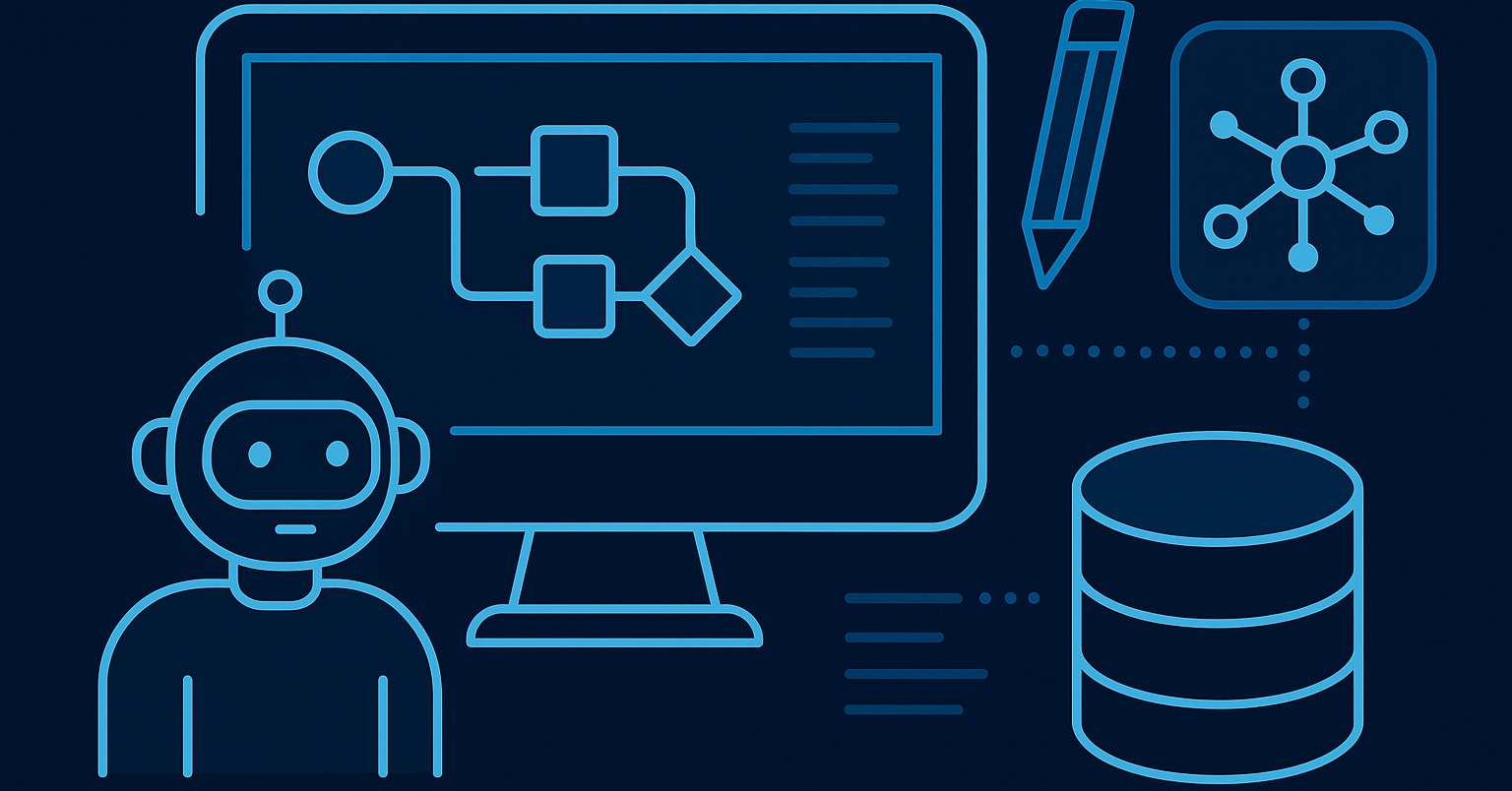
The Scoop: Langflow is an open-source platform for building, orchestrating, and deploying AI-powered agents and workflows - visually. Combining a low-code interface with full Python extensibility, it allows developers to design multi-agent systems, add RAG capabilities, and expose any flow as an API endpoint. With built-in observability and enterprise-ready deployment options, Langflow is becoming the go-to orchestration layer for AI agents. Whether you’re prototyping an LLM chatbot, building multi-step agent workflows, or embedding RAG pipelines into production apps, Langflow simplifies the complexity of agent orchestration into a drag-and-drop experience - without sacrificing developer control.
Why It's a Big Deal
Visual Workflow Builder: Simplifies LLM chains, multi-agent orchestration, and RAG pipelines with a drag-and-drop interface.
Instant API Deployment: Turns any flow into an API endpoint for seamless app integration.
Enterprise-Ready & Extensible: Supports observability, RBAC, scalable deployment, and integrates with leading vector DBs.
Under the Hood
Python-Based & Modular: Simple pip install, with extensible components for prompts, LLMs, embeddings, and more.
Flexible Deployment: Self-hosted via Docker/K8s or fully managed by DataStax.
Built-In Observability: Native integrations with LangSmith and LangFuse for monitoring and debugging.
Langflow sits at the sweet spot of developer-friendly agent orchestration - combining the accessibility of visual builders with the power of code-level customization. As AI applications get more complex, tools like Langflow are key to making multi-agent, RAG-powered systems usable and maintainable in production.
🔬 BELOW THE RADAR
Our hot picks for recent OSS projects to keep a close eye on for the future.
🛰️ ACI (GitHub) 3.2k ☆ – Open-Source Infra Layer for AI Agent Tool-Use

The Scoop: ACI.dev is an open-source infrastructure platform for AI agents, designed to unify tool integrations across 600+ services with built-in multi-tenant auth, granular permissions, and dynamic tool discovery. Instead of wiring up OAuth flows and API clients manually, developers can plug ACI.dev into any LLM framework and let their agents securely interact with external apps via a Unified MCP server or lightweight SDK.
Get started: Run locally or integrate via Python SDK.
pip install aci-python-sdk🐣 NanoVLM (GitHub) 2.4k ☆ – Minimalist Vision-Language Model in Pure PyTorch

The Scoop: nanoVLM is the “nanoGPT for VLMs” - a compact, 750-line implementation for training and fine-tuning small vision-language models. With modular components (vision backbone, language decoder, modality projection) and a dead-simple training loop, it's perfect for anyone looking to tinker, learn, or prototype VLMs without heavyweight frameworks. No SOTA claims, but surprisingly capable if you’ve got a GPU to spare.
Get started: Clone the repo and train with a single command:
git clone https://github.com/huggingface/nanoVLM.git
cd nanoVLM && python train.py
🌊 SurfSense (GitHub) 3.6k ☆ – Personal Knowledge-First AI Research Agent

The Scoop: SurfSense is a self-hosted, customizable AI research agent that bridges the gap between tools like Perplexity and your personal knowledge base. It integrates with Slack, Notion, GitHub, and search engines, offering RAG pipelines, hybrid search, and even podcast generation from chat sessions. Privacy-first, extensible, and built for power users who want full control over their research workflows.
Get started: Deploy locally via Docker or manual install with pgvector, FastAPI, and LangGraph stack.
Repository Radar is brought to you by Alexander, a Partner at Picus Capital, and Claudius, an Investor there. In this Substack, we focus on software infrastructure and open-source innovation in AI and beyond, tracking major trends while uncovering the hidden gems shaping the future of technology.